

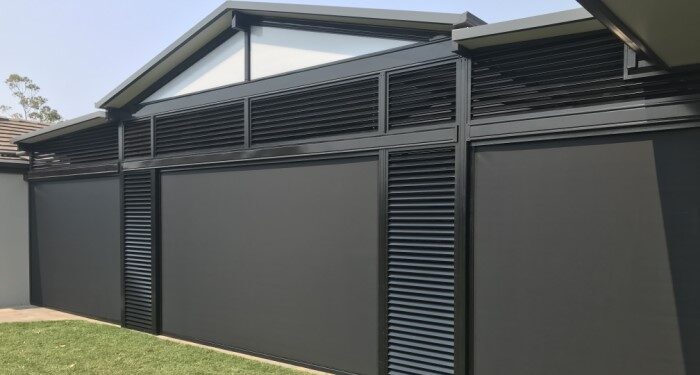
Motorised outdoor blinds are not just ordinary blinds with a button stuck on them. They are a fundamentally different outdoor living solution built for convenience, protection, and smart integration. Melbourne homeowners with patios, balconies, pergolas, and alfresco areas are increasingly choosing motorised systems over manual alternatives. The reason is straightforward: a Melbourne summer can flip from blazing sun to howling wind in under an hour. Manual blinds require you to be present, physically willing, and fast. Motorised blinds simply respond.
So what actually separates a motorised outdoor blind from a standard pull-down one? The difference runs deeper than the motor itself. It covers how the blind responds to weather, how it integrates with your home, and how consistently it performs across years of Melbourne’s famously unpredictable climate.
This guide walks through every meaningful difference. It covers motor types, fabric options, smart home compatibility, wind resistance, installation realities, and cost. By the end, you will know exactly what to look for and why it matters for your specific Melbourne outdoor space.
| 3,000+ Blinds Installed Across Melbourne | 60+ Years Combined Industry Experience | 100 Melbourne Locations Serviced | 5 Yr Product and Installation Warranty |
The Core Difference Between Motorised and Manual Outdoor Blinds
Manual outdoor blinds rely on physical operation. You pull a strap, crank a handle, or clip a latch to raise or lower the blind. For a single small blind, that works fine. However, for a large alfresco space with multiple blinds, it quickly becomes a chore. Furthermore, manual systems cannot respond to weather changes unless you are home and paying attention.
Motorised outdoor blinds, by contrast, operate through an electric tubular motor housed inside the rolling tube. You press a remote, tap an app, or speak a voice command. The blind moves smoothly, consistently, and stops precisely at the same point every time. That consistency actually protects the fabric. Manual systems often cause uneven rolling, which creates creases and strains the material prematurely.
Beyond convenience, the key operational difference is automation. Motorised systems can be connected to wind sensors, sun sensors, rain sensors, and smart home controllers. This means the blind can respond to Melbourne’s weather without any human input at all. If a southerly buster rolls in while you are at work, a wind-sensor-connected motorised blind retracts itself automatically. A manual blind just flaps and strains until someone notices.
Understanding the Motor Types Behind Electric Outdoor Blinds
Not all motors are created equal. This is where many Melbourne buyers get tripped up. They assume a motorised blind is simply a blind with any motor inside. In reality, the motor choice determines reliability, noise level, smart home compatibility, lifespan, and how precisely your blind positions itself.
Standard Tubular Motors
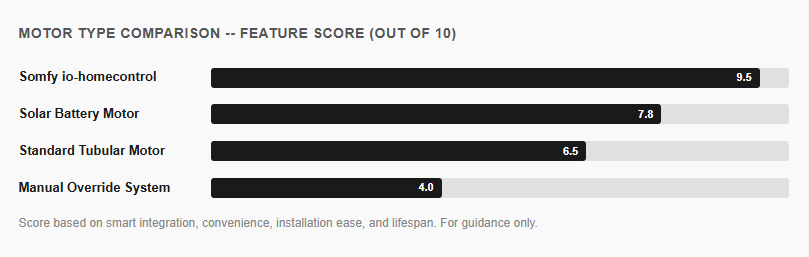
Standard tubular motors are the entry point for electric outdoor blinds. They sit inside the aluminium rolling tube, connect to mains power, and operate via a basic wall switch or handheld remote. They are reliable, relatively quiet, and widely compatible with different blind systems. Most standard motors from reputable Australian suppliers carry between 2 and 5-year warranties.
The limitation is integration. Standard tubular motors typically do not connect to apps, smart hubs, or voice assistants. They do one job well: move the blind up and down on command. For Melbourne homeowners who simply want convenience without full smart home integration, standard motors are a practical and cost-effective choice.
Somfy Motorised Outdoor Blind Systems
Somfy is the premium benchmark for motorised outdoor blind systems used across Australia. These are tubular motors built with additional intelligence. They support programmable travel limits, meaning the blind always stops at exactly the same point. Additionally, they connect to the Somfy TaHoma smart home hub, enabling app control, automation schedules, and integration with Google Home and Amazon Alexa.
Furthermore, Somfy’s io-homecontrol protocol allows multiple blinds to be grouped and operated simultaneously. This is particularly useful for Melbourne pergolas with four or more blinds covering a large entertaining space. One tap moves every blind in perfect synchronisation. See the full range of compatible systems at DIY Blinds.
Battery-Powered Motors
Battery-powered tubular motors have become increasingly viable for outdoor blind applications. They eliminate the need for mains power cabling to the blind tube, which simplifies installation considerably. Solar-charged battery motors extend this further by harvesting energy from direct Melbourne sunlight to keep the battery topped up year-round.
Verified Fact — Somfy Australia
Somfy’s RTS (Radio Technology Somfy) and io-homecontrol motors are compatible with Alexa, Google Assistant, and Apple HomeKit via compatible hubs. Somfy Australia carries a 5-year warranty on its motors. Source: Somfy Australia
Choosing the Right Fabric for Your Motorised Outdoor Blinds
The motor handles the movement. However, the fabric determines the actual performance of the blind in Melbourne’s outdoor conditions. Fortunately, motorised systems are compatible with every fabric type available across manual blind ranges. Therefore, you do not sacrifice material choice by going motorised.
Clear and Tinted PVC
Clear PVC fabric is the most popular choice for Melbourne alfresco and patio blinds. It creates a fully enclosed outdoor room, blocks wind and rain, and preserves sightlines into the garden. Tinted PVC adds glare reduction without sacrificing transparency completely. Motorised PVC blinds are especially practical because heavy PVC can be awkward to operate manually over large spans. The motor handles the weight effortlessly every time.
Shade Mesh Fabric
Shade mesh is the go-to for UV protection on north and west-facing Melbourne patios and pergolas. It filters harsh sunlight while allowing airflow to pass through. Mesh fabric does not create a sealed enclosure, so it suits breezy alfresco areas where ventilation matters. Motorised mesh blinds are especially useful on hot Melbourne summer days when you want shade without turning the alfresco into an oven.
Blockout Fabric
Blockout fabric completely eliminates light and visibility in both directions. It suits privacy screening, hot western-facing walls, and outdoor media room setups. Motorised blockout blinds are increasingly popular for Melbourne homes with outdoor cinema setups or with neighbour-facing alfresco walls. Explore the full fabric range across DIY Blinds’ outdoor blind products.
Fabric Suitability Guide for Melbourne Outdoor Spaces
| bric Type | Wind Block | UV Protection | Visibility | Best For |
|---|---|---|---|---|
| Clear PVC | Excellent | Moderate | Full | Alfresco, cafe-style enclosures |
| Tinted PVC | Excellent | Good | Partial | West-facing patios, privacy |
| Shade Mesh | Moderate | Excellent | Outward only | Pergolas, open alfresco areas |
| Blockout | Good | Complete | None | Privacy walls, outdoor media |
Why the Guide System Matters as Much as the Motor
The motor moves the blind. However, the guide system determines how the blind performs when Melbourne wind hits it. This is a detail many homeowners overlook entirely when comparing automated outdoor blind options.
Zip-Track and Zipscreen Systems
Zip-track systems thread the fabric edge through an extruded aluminium side channel. This keeps the blind tensioned and stable even in moderate wind conditions. Ziptrak and Zipscreen are two of the most widely recognised zip-track systems used across Melbourne. Both work seamlessly with motorised drives, and both significantly reduce fabric flutter and billowing in coastal and elevated Melbourne locations.
The sealed edge also prevents insects from entering around the blind sides. For Melbourne homeowners in mosquito-prone areas near waterways or parks, this is a genuine quality-of-life benefit. Browse Ziptrak and Zipscreen options at DIY Blinds to see how these systems integrate with motorisation.
Slide-Track and Ezip Systems
Slide-track and Ezip systems use a bead or cord running along the fabric edge inside a side channel. They offer a cost-effective guided alternative to full zip-track profiles. Wind resistance is solid for sheltered Melbourne spaces, though not quite at the level of a full zip-profile system in exposed locations. Motorised Ezip blinds are a popular choice for Melbourne pergolas that need automation without the premium price of a full Ziptrak build.
Open-Sided Roller Blinds
Open-sided motorised roller blinds use no guide track at all. They suit lightly sheltered areas and are the simplest motorised setup to install. In exposed Melbourne locations, fabric movement can occur in stronger winds. Therefore, open-sided systems are better suited to protected courtyards and undercover balconies rather than open pergola perimeters.
Smart Home Integration for Automated Outdoor Blinds in Melbourne
This is where motorised outdoor blinds genuinely leave manual alternatives behind. Smart home integration turns your outdoor blinds into a responsive, automated layer of your home’s climate and comfort management system.
Melbourne homeowners are increasingly building connected homes. Smart lighting, smart thermostats, and smart security are now mainstream. Adding automated outdoor blinds to that ecosystem creates genuine compounding value. Your home can respond to the environment automatically, even when you are away.
App Control
Most modern motorised outdoor blind systems support smartphone app control via iOS and Android. With a compatible motor and hub, you can raise or lower every blind on your property from anywhere in the world. Additionally, you can set time-based schedules. For example, schedule blinds to lower every day at 1pm during Melbourne’s summer peak UV period and raise at 5pm when the sun angle changes.
Google Home and Amazon Alexa Integration
Somfy-integrated motorised blinds connect to both Google Home and Amazon Alexa via compatible smart hubs. Once connected, you can operate every blind with a simple voice command. “Hey Google, close the alfresco blinds” becomes a perfectly functional instruction. This is particularly useful when your hands are full during entertaining or cooking.
Sensor Automation
Wind sensors are arguably the most practically valuable sensor for Melbourne outdoor blinds. When wind speed exceeds a programmed threshold, the sensor triggers automatic blind retraction. This protects the fabric and motor from storm damage, even when you are not home. Sun sensors automate shading based on sunlight intensity. Rain sensors retract or lower blinds based on detected moisture. Together, these sensors create a genuinely intelligent outdoor shading system.
Verified Fact — Your Home: Australia’s Guide to Environmentally Sustainable Homes
External shading systems, including motorised outdoor blinds, can reduce solar heat gain through windows by up to 90% when correctly positioned. This directly reduces summer cooling loads. Source: YourHome.gov.au — Shading
Why Melbourne’s Climate Makes Motorised Blinds the Practical Choice
Melbourne’s climate is not just unpredictable. It is actively demanding on outdoor products. Four distinct seasons, ultraviolet radiation levels among the highest in the world, strong southerly wind changes, occasional hail, and 40-degree summer days create a genuinely tough environment for outdoor blinds of any type.
Manual blinds require constant human intervention to respond to these conditions. Therefore, they often spend long periods in the wrong position simply because the owner could not get to them in time. This exposes the fabric to UV degradation, wind strain, and water ingress unnecessarily.
Motorised outdoor blinds with sensor integration respond instantly. Moreover, because they position consistently every time, the fabric experiences even wear rather than stress-concentrated crease points from uneven manual rolling. Over a five to ten year ownership period, this consistency extends fabric lifespan meaningfully.
UV protection is particularly relevant. Australia has some of the highest UV radiation levels globally, and Melbourne records UV Index levels above 3 (the threshold for skin damage) for the majority of summer days. Motorised shade mesh blinds that automatically lower at peak UV periods provide genuine sun protection for families entertaining outdoors. See ARPANSA’s UV Index guidance for Melbourne-specific UV data.
Which Spaces Suit Motorised Outdoor Blinds in Melbourne Homes
Motorised outdoor blinds are not a single product. They span a range of systems that each suit specific Melbourne outdoor spaces differently. Understanding which system fits which space saves money and prevents disappointment down the track.
Motorised Alfresco Blinds
Alfresco areas attached to Melbourne homes are among the most popular applications for motorised blinds. A typical Melbourne alfresco has three open sides that need full coverage during wind and rain. Motorised systems allow all three blinds to operate simultaneously from a single remote or app command. This is dramatically more practical than manually cranking three separate blinds every time the weather shifts.
Motorised Pergola Blinds
Freestanding pergolas require blinds that can handle more exposure than an attached alfresco. Furthermore, they often face multiple aspects, meaning sun and wind attack from different directions at different times of day. Motorised pergola blinds with sun-tracking automation handle this dynamically without owner input. Explore DIY Blinds’ pergola blind solutions for compatible systems.
Motorised Balcony Blinds
Melbourne apartments and townhouses with balconies face specific challenges. Wind exposure increases significantly with height. Additionally, landlord or owners corporation rules sometimes restrict permanent structural modifications. Motorised balcony blinds using tension-mounted or track-clamp systems can work within these restrictions while still delivering full automation and privacy control.
Motorised Patio Blinds
Covered patios on Melbourne suburban homes are the most common installation context. Motorised patio blinds here primarily serve weather protection, privacy from neighbouring properties, and glare management. A sensor-equipped system that reacts to afternoon sun on west-facing Melbourne patios transforms an otherwise unusable outdoor space into a genuinely comfortable year-round room.
Understanding the Cost of Motorised Outdoor Blinds in Melbourne
Cost is where many Melbourne homeowners hesitate. Motorised systems do cost more than manual alternatives upfront. However, the comparison requires a more complete picture than simply comparing purchase prices.
Approximate Cost Comparison: Motorised vs Manual Outdoor Blinds (Melbourne, 2026)
| System Type | Approx. Entry Cost Per Blind | Smart Integration | Avg. Motor Lifespan |
|---|---|---|---|
| Manual Roller Blind | From $200 | None | N/A |
| Standard Motorised Blind | From $500 | Remote only | 10+ years |
| Somfy Motorised Blind | From $900 | App, voice, sensors | 10-15 years |
| Motorised Zip-Track System | From $1,200 | Full smart integration | 10-15 years |
These figures are indicative only and depend on size, fabric, and installation complexity. Always request a detailed quote for your specific Melbourne property.
The genuine value question is fabric longevity. Manual blinds frequently develop creases, uneven rolling, and UV degradation faster due to inconsistent operation. Motorised blinds roll evenly every time. Over five to ten years, reduced fabric replacement costs and better weather responsiveness often narrow the real-world cost gap significantly.
Additionally, motorised outdoor blinds contribute to thermal comfort and energy efficiency. Blocking radiant heat before it enters the home through glass reduces air conditioning loads during Melbourne summers. This translates into measurable energy savings over the product’s lifespan.
Installation Realities for Motorised Outdoor Blinds
Installation separates motorised blinds from their manual counterparts in a few important ways. Manual blinds require brackets, a tube, and fabric. Motorised blinds add wiring, motor housing, and in some cases, hub configuration. This additional complexity affects both DIY feasibility and professional installation requirements.
DIY Installation Considerations
Handy Melbourne homeowners can successfully install motorised outdoor blinds, particularly battery-powered motor systems that require no electrical wiring. Furthermore, many suppliers including DIY Blinds provide installation-ready kits designed for homeowner installation. The key requirement is accurate measurement, solid bracket anchoring, and correct motor limit programming.
Mains-powered motor systems involve low-voltage wiring to the motor tube. In most cases, this does not require a licensed electrician, as the connection occurs at a standard power point. However, if new power points need installation at ceiling or fascia level, a licensed electrician is required under Australian Standards.
Professional Installation Benefits
Professional installation ensures precise motor limit setting, correct bracket load distribution, and hub pairing with smart home systems. For large Melbourne alfresco or pergola projects with four or more motorised blinds and sensor integration, professional installation significantly reduces commissioning time and eliminates setup frustration. DIY Blinds offers professional installation across Melbourne. Contact the team on 1300 040 577 to discuss your specific requirements.
Complementary Outdoor Shading and Security Products for Melbourne Homes
Motorised outdoor blinds often work best as part of a broader outdoor living and protection strategy. Fortunately, DIY Blinds offers a full range of complementary products that integrate naturally with a motorised blind installation.
- Window Awnings: Motorised window awnings extend the shading footprint beyond the alfresco or patio, protecting windows and reducing indoor heat gain directly. They complement alfresco blind systems on north and west-facing Melbourne facades.
- Roller Shutters: Residential Curved, Storm Shield, and Fire Shield roller shutters from DIY Blinds add a structural security and weather barrier layer. Motorised roller shutters integrate with the same smart systems as motorised blinds for whole-home automation.
- Cafe Blinds: Clear PVC cafe blinds on alfresco perimeters pair effectively with motorised overhead or side blinds to create a fully enclosed, all-weather outdoor room.
Frequently Asked Questions About Motorised Outdoor Blinds
Are motorised outdoor blinds worth the extra cost over manual blinds?
Yes, for most Melbourne homeowners they are. The convenience, consistent fabric protection, and potential for smart home integration justify the higher upfront cost. Fabric longevity, energy savings, and added resale appeal further support the investment over a 10-year ownership period.
How long do motors in outdoor blinds actually last before needing replacement?
Quality tubular motors from reputable brands typically last between 10 and 15 years with normal residential use. Somfy motors often carry 5-year manufacturer warranties and are well established for long-term reliability in Australian outdoor conditions.
Can motorised outdoor blinds be controlled from a phone app?
Yes. Most modern motorised outdoor blind systems include app control for both iOS and Android. The Somfy TaHoma app is widely used by Melbourne installers and supports scheduling, grouping, and scene automation alongside simple manual control.
Do motorised outdoor blinds work with Google Home or Amazon Alexa?
Yes. Systems using Somfy io-homecontrol or RTS with a compatible hub integrate with both Google Home and Amazon Alexa. Voice commands for individual blinds or grouped outdoor areas work reliably once the initial setup is complete.
What happens to motorised outdoor blinds during a power outage?
Most mains-powered motorised systems include a manual override or hand crank for operation during outages. Battery-powered motor systems operate entirely independently of mains power. Solar-charged battery motors maintain charge through Melbourne sunlight year-round.
Are motorised outdoor blinds suitable for high-wind areas in Australia?
Yes, when paired with wind sensors and a guided track system. Zip-track systems like Ziptrak and Zipscreen hold the fabric securely in moderate wind. Wind sensors trigger automatic retraction before conditions exceed the fabric’s safe operating range.
How hard is it to install motorised outdoor blinds yourself versus using a professional?
Battery-powered motorised blinds are well-suited to confident DIY installation. Mains-powered systems are also achievable for most homeowners, though new power point installation requires a licensed electrician. Larger multi-blind projects with smart hub integration are typically better handled by a professional installer for correct commissioning.
What is the difference between a Somfy motor and a standard tubular motor in outdoor blinds?
Somfy motors are premium tubular motors featuring programmable travel limits, smart home protocol support (io-homecontrol or RTS), app and voice integration, and 5-year warranties. Standard tubular motors are reliable and quiet but typically limited to remote or wall switch operation without smart home connectivity.
Do motorised outdoor blinds need regular servicing or maintenance?
Motors themselves need minimal servicing under normal use. Annual checks of fabric cleanliness, bracket tightness, side track lubrication, and motor limit accuracy are recommended. PVC fabric benefits from periodic cleaning with mild detergent to prevent UV brittleness over time.
Can I add motorisation to my existing outdoor blinds or do I need to replace them entirely?
In many cases, a compatible tubular motor can be retrofitted into an existing blind tube without replacing the entire system. Compatibility depends on tube diameter, bracket type, and fabric weight. A professional assessment is recommended before purchasing a retrofit motor.
What fabric is best for motorised outdoor blinds in Melbourne?
PVC suits maximum weather protection and sealed alfresco enclosures. Shade mesh suits UV filtering with airflow on north and west-facing pergolas. Blockout fabric suits privacy screening and outdoor media setups. All fabric types work equally well with motorised systems.
The Final Word on Motorised Outdoor Blinds for Melbourne Homes
Motorised outdoor blinds are not a luxury upgrade reserved for high-end builds. They are a genuinely practical response to Melbourne’s climate demands. The combination of smart automation, consistent fabric positioning, sensor-driven weather response, and smart home integration creates an outdoor living solution that a manual blind simply cannot match.
Furthermore, the technology has matured. Motors are quieter, more reliable, and longer-lasting than they were a decade ago. App control and voice integration are now standard in premium systems. Battery-powered options have removed the wiring barrier for many Melbourne installations. The barrier to entry is lower than most homeowners assume.
Whether your space is a Melbourne alfresco, a freestanding pergola, a north-facing patio, or a high-rise balcony, there is a motorised outdoor blind system designed for it. The key is matching the right motor, fabric, and guide system to your specific space, sun orientation, and wind exposure.
The team at DIY Blinds has been helping Melbourne homeowners get this combination right across hundreds of local installations. Start the conversation today and get a quote tailored to your specific property.
Since you have made it this far, here is something worth jumping to: explore the full DIY Blinds product range and see exactly which motorised outdoor blind system suits your Melbourne home. Fair warning — you might end up redesigning your entire alfresco. We accept no responsibility for that.