

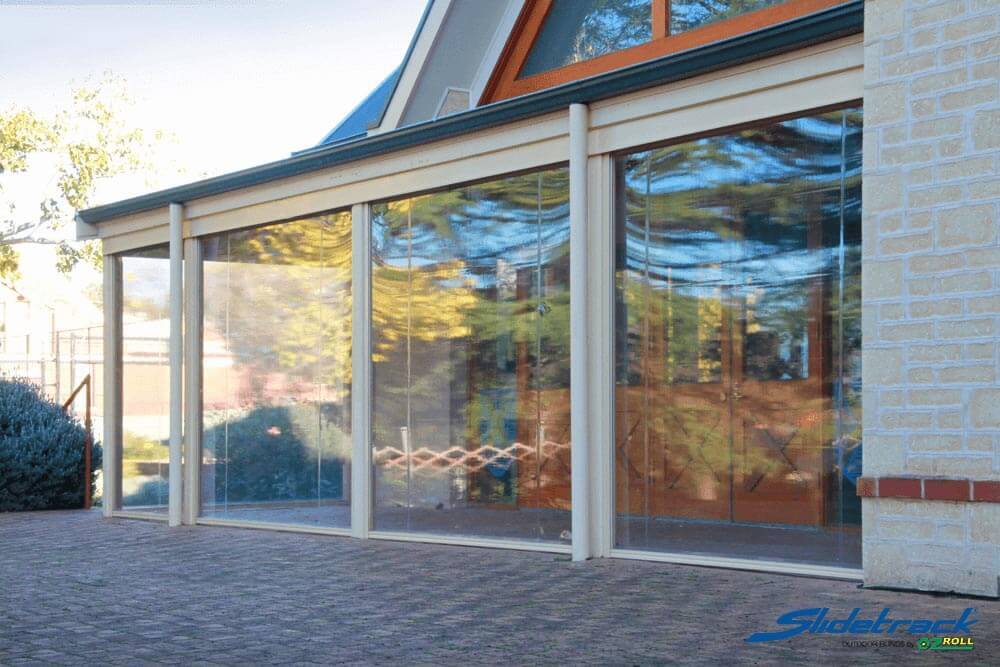
If you have been sitting inside while your alfresco sits empty on a windy Melbourne afternoon, outdoor cafe blinds in Melbourne might be exactly what your home is missing. More and more Melbourne homeowners are choosing cafe blinds to convert their patios, verandahs, and courtyards into genuinely liveable spaces throughout the year. These flexible, purpose-built enclosures block wind, deflect rain, filter UV rays, and add a layer of privacy without sacrificing the open feel of outdoor living. Furthermore, they cost a fraction of permanent structural additions. This guide covers everything you actually need to know before buying.
What Exactly Are Outdoor Cafe Blinds?
Cafe blinds, also widely called bistro blinds or alfresco blinds, are retractable drop-screen enclosures designed specifically for outdoor use. They suspend from an overhead track or pelmet and roll or fold down to form a transparent or semi-transparent weather barrier across open sides of a patio, verandah, pergola, or deck.
According to Wikipedia’s entry on window blinds, outdoor drop blinds have evolved significantly from their original commercial applications in European street cafes and restaurants into a staple residential product across Australia. Today, they appear in residential homes as much as in hospitality settings.
Modern cafe blinds typically use heavy-duty clear or tinted PVC, canvas, or mesh fabric panels. They install with minimal structural modification. Additionally, they retract neatly when not needed, preserving the open-air aesthetic homeowners value.
Why Melbourne Weather Makes a Strong Case for Outdoor Blinds
Melbourne’s famously unpredictable climate is the single biggest reason homeowners here invest in outdoor cafe blinds. The city genuinely experiences four seasons in one day — bright morning sun followed by a gusty southerly change in the afternoon, then a brief shower before dinner. Without some form of weather barrier, outdoor spaces become unreliable for entertaining or everyday use.
Melbourne averages around 106 rainfall days per year, according to the Bureau of Meteorology’s climate data for Melbourne. Southerly winds regularly reach 30 to 50 km/h in spring and autumn. Combined, these conditions make an uncovered alfresco area genuinely difficult to use for a significant portion of the year.
Beyond the wind and rain, Melbourne’s UV index regularly reaches extreme levels between October and March. The Cancer Council Australia consistently recommends shade and UV-protective barriers during these months. Quality outdoor cafe blinds with UV-rated PVC or mesh materials provide a practical, everyday solution.
Rain, Wind, and UV: What Cafe Blinds Actually Handle
This is the question most Melbourne homeowners ask first: do outdoor cafe blinds for wind protection actually work? The short answer is yes — but the performance level depends heavily on the system type, the material quality, and how the blinds are installed.
Wind Protection Performance
Standard cafe blinds with rope or shock-cord tensioning provide effective wind protection in moderate conditions — typically up to around 40 to 50 km/h. However, they can flap or distort in stronger gusts if not properly tensioned. For exposed Melbourne properties, systems with side channels offer considerably better performance.
Ziptrak systems, such as those available from DIY Blinds’ Ziptrak range, use a fabric or PVC blind threaded through an aluminium zip track on each side. This eliminates flapping entirely and maintains a taut, sealed edge even in strong winds. It is a measurable upgrade over standard cafe blinds for wind-prone locations.
Rain Resistance
Clear PVC cafe blinds significantly reduce wind-driven rain penetration. Nevertheless, they are not fully watertight — particularly at the side edges if there are no side tracks. For alfresco areas exposed to heavy horizontal rain, a tracked system such as Ziptrak or Ezip blinds provides a far tighter seal. Pairing blinds with a well-designed pergola or roof structure further improves rain management.
UV Filtering
Quality outdoor PVC and mesh fabrics carry UV ratings. Clear PVC typically filters between 70 and 90 per cent of UV radiation depending on thickness. Tinted or grey PVC and mesh fabrics can achieve even higher filtration. The Cancer Council Australia recommends using shade structures rated UPF 50+ for maximum sun protection, a standard many quality outdoor blind materials meet.
For Melbourne’s spring and summer UV levels, choosing outdoor cafe blinds with a UPF-rated fabric is not just a comfort decision — it is a genuine health consideration. Check product specifications for UPF ratings before purchasing.
Enclosing an Alfresco Area in Melbourne: What to Know First
Enclosing an alfresco with blinds is one of the most cost-effective ways to extend your living space without major construction. Unlike permanent walls or glazed enclosures, cafe blinds and tracked blind systems are retractable — giving you the flexibility of both open and enclosed configurations.
Before installation, there are a few practical considerations. First, check whether your alfresco area has an existing roof structure or pergola. Cafe blinds need an overhead fixing point, so a solid pergola beam or fascia is essential. Second, consider the number of open sides needing coverage. Three-sided enclosures are common in Melbourne residential layouts and are very manageable with standard cafe blind systems.
Moreover, Melbourne planning rules may apply depending on your property. The Victorian Department of Transport and Planning provides permit information for residential structures. In most cases, retractable blind systems do not require a planning permit, but it is always wise to verify with your local council for your specific property type.
Comparing Outdoor Blind Systems for Melbourne Homes
Not all outdoor blind systems are equal. Choosing the right one depends on your wind exposure, privacy needs, budget, and how your space is structured. Here is how the main systems compare:
Outdoor Blind Systems: Side-by-Side Overview
| System | Wind Seal | Rain Block | Best For |
| Standard Cafe Blinds | Moderate | Moderate | Sheltered patios, verandahs |
| Ziptrak Blinds | Strong | Strong | Exposed alfresco, open decks |
| Zipscreen Blinds | Strong | Moderate | Windows, sun-room facades |
| Ezip Blinds | Very Strong | Strong | High wind, fully enclosed spaces |
| Slide Track Blinds | Strong | Strong | Large openings, stacking panels |
Ziptrak blinds from DIY Blinds remain one of the most popular choices for Melbourne alfresco enclosures. The fabric threads through an aluminium side channel, creating a tension-maintained screen with virtually no gap for wind or rain to penetrate. For larger span openings, Slide Track blinds allow individual panels to stack neatly to one side, which suits wide alfresco bays.
Meanwhile, Ezip blinds offer a motorised, tensioned zip track option for maximum performance in exposed locations. And Zipscreen blinds are particularly well suited to window openings and facade applications where a sleek external roller profile is preferred.
Outdoor Cafe Blinds for Small Courtyards and Compact Spaces
One of the most underrated applications for cafe blinds in Melbourne is the small courtyard. Many inner-Melbourne and middle-ring suburb properties have compact outdoor areas that are otherwise exposed and difficult to use in all seasons.
Fortunately, cafe blinds are among the few outdoor solutions that actually suit tight spaces. Because they roll or fold upward when retracted, they take up minimal room in the open position. There is no sliding door mechanism requiring clearance, no swinging canopy arms needing space, and no structural footings in the ground.
Additionally, enclosing a small courtyard with clear PVC cafe blinds creates a greenhouse-like microclimate — trapping warmth from winter sun while blocking the cold southerly wind. This effect can make a compact courtyard usable through Melbourne winters in a way that no umbrella or free-standing screen could achieve.
Outdoor Cafe Blinds vs Window Awnings: Which One Suits Your Situation?
This comparison comes up constantly on Melbourne renovation forums, and the answer depends entirely on what problem you are trying to solve. Cafe blinds and window awnings serve genuinely different purposes — and in many cases, the right answer is both.
When Cafe Blinds Are the Right Solution
Choose cafe blinds when your goal is to enclose or shelter an existing outdoor living area. They create a wraparound weather barrier for patios, verandahs, and alfresco zones. Furthermore, they provide privacy, wind protection, and UV filtering simultaneously. If you entertain outdoors and want year-round usability, cafe blinds are the correct category.
When Window Awnings Make More Sense
Window awnings are designed to protect windows from direct sunlight — reducing glare and heat entry into the interior of your home. They project outward from the wall above a window opening, casting shade on the glass. If your primary concern is keeping your interior cool and reducing air conditioning costs, window awnings from DIY Blinds are worth exploring alongside or instead of cafe blinds.
In practice, many Melbourne homes benefit from window awnings on north and west-facing windows to manage heat gain, while cafe blinds on the alfresco create a functional outdoor room. These two solutions complement each other very well in a whole-home approach.
Materials, Durability, and Long-Term Value
Choosing the right material for outdoor cafe blinds in Melbourne comes down to what you prioritise most — visibility, UV protection, privacy, or durability in specific weather conditions. Here is a practical breakdown of the main options.
Clear PVC
The most popular material for residential cafe blinds. It offers full visibility through the blind, preserves the open feel of the space, and provides effective protection from wind and light rain. Quality marine-grade clear PVC maintains clarity for years. However, budget PVC can yellow or cloud over time with UV exposure. Always look for products with a UV stabiliser additive in the formulation.
Tinted or Smoke PVC
Provides the same weather protection as clear PVC with the addition of glare reduction and increased privacy. Well suited to north or west-facing alfresco areas exposed to harsh afternoon sun in Melbourne summers. Tinted options also reduce solar heat gain inside an enclosed area.
Mesh and Screenweave Fabrics
Mesh fabrics allow airflow while filtering UV rays and reducing wind velocity. They suit spaces where ventilation is a priority and full enclosure is not required. Many Zipscreen and Ziptrak systems offer mesh fabric options alongside clear PVC, allowing homeowners to choose the right balance for their situation.
Canvas and Blockout Fabric
Used for maximum privacy and blockout applications. These are less common in alfresco enclosures but appear in side-panel applications for pergolas needing shade on specific angles. They are not suited to applications where view retention matters.
Outdoor Cafe Blinds Installation in Melbourne: What the Process Looks Like
Understanding the installation process helps you plan realistically — both for timing and for what to expect on the day. Outdoor cafe blinds installation in Melbourne typically follows a straightforward sequence, though complexity increases with larger or motorised systems.
Step 1 — Measure and Quote
The process begins with accurate measurement of each opening. Width, drop height, overhead fixing availability, and surface material (timber, steel, concrete) all affect the product specification. A professional measure-and-quote ensures the system fits correctly and operates smoothly from day one.
Step 2 — Product Selection and Lead Time
Once you have confirmed measurements and chosen a system, products are typically custom-made to your dimensions. Lead times for quality outdoor blind systems in Melbourne generally range from two to six weeks, depending on the manufacturer and product complexity.
Step 3 — Installation Day
Installation of a standard three-sided cafe blind system on a residential alfresco typically takes between two and five hours. Ziptrak or motorised systems take longer due to the precision required for side channel alignment and electrical connection. Professional installers handle bracket fixing, blind hanging, tensioning, and operational testing.
Step 4 — Demonstration and Handover
A reputable supplier will demonstrate operation, explain maintenance, and provide warranty documentation before leaving. If you are considering DIY installation, the team at DIY Blinds can advise on suitability of self-installation for specific products.
Tip: Always confirm that your alfresco structure can support the blind system’s weight and fixing requirements before booking installation. Timber pergola beams, steel rafters, and concrete fascias each require different fixing methods.
Energy Efficiency and Privacy Benefits Worth Knowing
Beyond weather protection, outdoor cafe blinds in Melbourne deliver two additional advantages that homeowners often underestimate until after installation: energy efficiency and everyday privacy.
Passive Energy Efficiency
An enclosed alfresco acts as a thermal buffer zone between your interior living spaces and the exterior environment. During Melbourne winters, a PVC-enclosed alfresco traps solar warmth during the day and reduces cold air infiltration into the home at night — reducing the demand on your heating system for adjacent rooms. During summer, correctly chosen tinted or mesh blinds reduce solar heat gain on glass-fronted living areas significantly.
The Australian Government’s energy efficiency resources highlight passive solar design principles that align directly with how enclosed outdoor areas interact with your home’s thermal performance.
Privacy Without Isolation
Clear PVC cafe blinds provide a subtle degree of privacy from street-facing or neighbour-facing aspects, especially in the evening when interior lighting makes open spaces feel exposed. Tinted or smoke PVC significantly increases daytime privacy without blocking the view outward from inside. For Melbourne homes on narrow blocks or in close-proximity suburban settings, this benefit alone often justifies the investment.
Keeping Your Outdoor Cafe Blinds in Good Shape
Well-maintained cafe blinds can last many years in Melbourne’s conditions. Fortunately, the maintenance routine is simple and does not require professional servicing for most tasks.
- Regular wiping: Use a soft cloth with mild soapy water to clean PVC panels. Avoid abrasive cleaners or solvents that can damage the UV stabiliser layer. Wipe down every four to eight weeks in Melbourne’s dusty spring and summer months.
- Check tensioning: Rope or bungee cord tensioning on standard cafe blinds should be inspected seasonally. Replace any cord showing signs of UV degradation or fraying before it causes the blind to distort.
- Lubricate tracks: Ziptrak and Slide Track systems benefit from an annual application of silicone spray lubricant along the aluminium channel. This keeps the fabric or PVC moving smoothly and reduces wear at the zip edges.
- Retract in extreme conditions: Roll or fold blinds during hail warnings or severe storm events. Melbourne’s occasional violent summer storms produce hail large enough to damage PVC panels if left extended.
- Inspect fixings annually: Check all mounting brackets and hardware for corrosion or loosening, particularly after Melbourne’s winter months when moisture exposure is highest.
Also, roller shutters offer an alternative for situations demanding maximum protection and security. The DIY Blinds roller shutter range — including Residential Curved, Storm Shield, and Fire Shield options — provides a more robust solution for windows and doors needing hard weather or bushfire ember protection.
Frequently Asked Questions About Outdoor Cafe Blinds
These are the questions Melbourne homeowners ask most often before purchasing. Each answer below is kept concise and direct.
The Final Word: Are They Worth It for Melbourne Homes?
If you want honest advice, outdoor cafe blinds in Melbourne are genuinely worth it for the majority of homeowners with an existing alfresco, patio, verandah, or courtyard structure. Melbourne’s variable climate means unprotected outdoor spaces sit unused for too many months of the year. Cafe blinds change that equation directly.
They are not a luxury add-on — they are a practical, cost-effective solution to a real Melbourne outdoor living problem. Whether you choose standard PVC cafe blinds for a sheltered patio, a full Ziptrak system for an exposed alfresco, or a combination of window awnings and outdoor blinds for a whole-home approach, the result is the same: more usable space, more comfortable living, and more value from your property.
The team at DIY Blinds supplies and installs outdoor cafe blinds across Melbourne, covering the full range from standard systems through to motorised Ezip and Ziptrak solutions. Visit the blinds product page to explore options, or contact the team directly for a no-obligation measure and quote.