

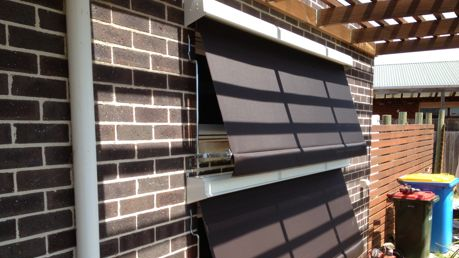
If your living room, bedroom, or home office becomes uncomfortably hot in the afternoon, your windows could be part of the problem. For Melbourne homeowners, window awnings Melbourne searches often begin with a practical question: how can you block strong afternoon sunlight without making the room permanently dark?
West-facing windows receive direct sunlight when the sun sits relatively low in the sky. Unlike high-angle sunlight, which an overhead projection can sometimes block effectively, low-angle afternoon sun can pass beneath an awning and reach the glass. The result can be glare, unwanted solar heat gain, and a room that stays uncomfortable into the evening.
The right solution depends on your window’s orientation, size, surrounding structures, and desired coverage. Outdoor window awnings, angled awning systems, and vertical external blinds each have different strengths. This guide explains how to compare them and what Melbourne homeowners should consider before buying.
Why West-Facing Windows Get So Hot in Melbourne
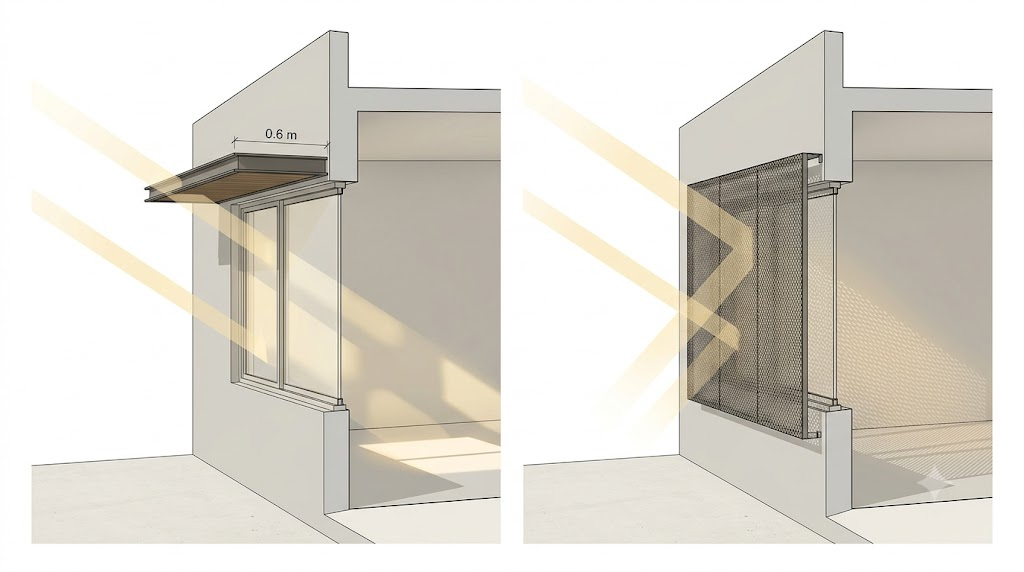
West-facing windows receive sunlight later in the day, when the sun moves towards the western horizon. During warm weather, direct solar radiation passing through the glass can increase indoor heat and glare just when many households are preparing dinner, relaxing, or working from home.
Internal curtains and blinds remain useful for privacy and light control, but they generally intercept sunlight after it has passed through the glazing. External shading can stop much of that direct sunlight before it reaches the glass, making it an important consideration when improving summer comfort.
According to the Australian Government’s Your Home shading guidance, east- and west-facing windows need particular attention because low-angle sunlight is harder to block using horizontal shading alone. However, adjustable external shading can help balance summer protection with changing daylight requirements.
For a Melbourne home, the practical question is not simply whether an awning provides shade. It is whether its shape, projection and coverage suit the angle at which sunlight reaches your particular window.
Which Window Awnings Work Best for West-Facing Windows?
The most suitable option is the one that intercepts the sunlight entering your window while meeting your requirements for daylight, appearance, operation, and installation.
Compare the following designs before choosing a product.
1. Angled or drop-arm window awnings
An angled awning projects outward and downward over the window. Depending on its design and adjustment, it can shade more of the window vertically than a shallow overhead canopy. This makes drop-arm-style designs worth investigating when afternoon sun strikes the glass at a low angle. So, check the amount of coverage the product provides when extended, whether it obstructs the view, and whether its dimensions suit the opening.
2. Fixed or conventional window awnings
Fixed window awnings can provide consistent overhead shade and may suit homes where the desired coverage remains similar throughout the year. However, a shallow projection may leave a west-facing window exposed when the sun is low.
Before selecting one, consider the awning’s projection, angle, window height, and surrounding obstructions. A product that performs well over a north-facing window may not provide equivalent protection on a west-facing elevation.
3. Retractable awnings
Retractable awnings can be extended when shade is needed and withdrawn when you want more sunlight. Their flexibility is useful for households balancing summer comfort with seasonal changes.
However, not every retractable awning is designed for the same purpose. Folding-arm systems are commonly associated with patios and larger outdoor areas, while other designs are intended for individual windows. So, confirm the product’s intended application before ordering.
4. External blinds for more vertical coverage
External blinds can be a better fit when sunlight enters from the side rather than from directly above. A vertical screen can cover more of the glazing and may provide additional control over glare and privacy, depending on its fabric, openness and operating position.
You may explore different types of external blinds in Melbourne when comparing solutions. Motorised outdoor blinds and automated outdoor blinds may also be worth considering where the relevant product supports those operating features.
Best Shading for North, East, West & South-Facing Windows
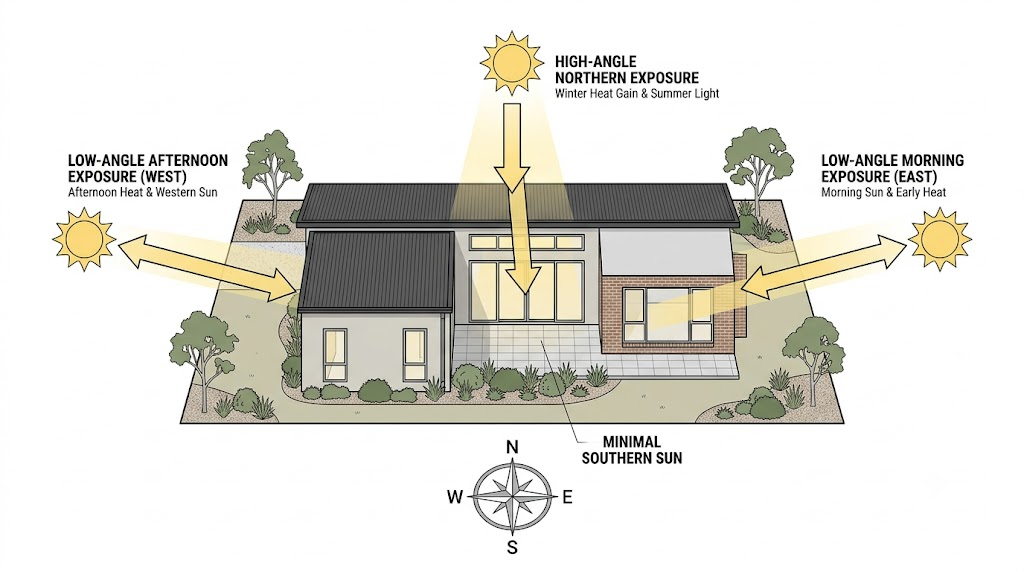
Window orientation provides a useful starting point, but it is not the only factor. Nearby buildings, trees, eaves, window size, and seasonal sun angles can all change the result.
| Window orientation | Typical challenge | Shading to investigate |
| North-facing | Higher-angle sun, particularly in summer | Appropriately sized horizontal awnings or adjustable overhead shading |
| East-facing | Direct morning sun and glare | Adjustable external blinds or angled window awnings |
| West-facing | Low-angle afternoon sun and unwanted heat | Vertical external shading, suitable angled awnings or a combination where appropriate |
| South-facing | Usually less direct sunlight in Melbourne, although conditions vary | Assess actual exposure before investing in additional shading |
Note: These are general starting points, not fixed specifications. Your home’s latitude, neighbouring structures and window geometry affect how sunlight reaches the glazing.
Window Awnings vs External Blinds: What’s the Difference?
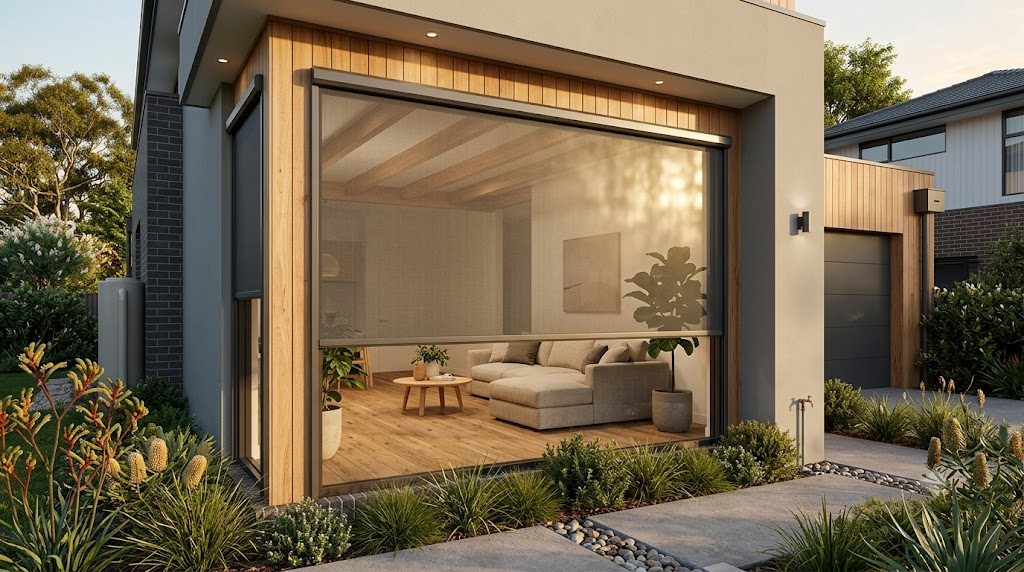
Window awnings and external blinds both help intercept sunlight outside the building, but their coverage differs. A window awning typically projects above the opening, whereas an external blind can descend across the window or opening to provide vertical coverage.
| Consideration | Window awning | External blind |
| Coverage | Primarily overhead or angled, depending on design | Can cover more of the window vertically |
| Low-angle afternoon sun | Depends on projection and angle | May provide better coverage when correctly positioned |
| Appearance | Can add a distinct exterior feature | Can offer a more screen-like appearance |
| Daylight and views | Depends on the design and amount of shade | Depends on fabric openness and how far the blind is lowered |
| Best next step | Check projection, mounting and coverage | Check screen coverage, visibility and operating requirements |
Neither category is automatically better for every home. If your priority is to shade the upper portion of a window, an awning may be appropriate. If direct afternoon sun reaches most of the glazing, investigate whether a vertical external blind offers more suitable coverage.
Where a room has several different openings, it may make sense to use different shading products rather than applying one solution to every window. So, make sure you compare a wide range of window awnings with the relevant external shading options before deciding.
How to Reduce Afternoon Heat in Melbourne This Summer
Permanent shade may help reduce direct sunlight in the summer, but it may also block daylight or desirable winter warmth. The right balance depends on the room, the window’s orientation, and how you use the space.
Consider adjustable shading
Where a suitable retractable or adjustable product is available, it can provide more control than permanent overhead coverage. You can extend the shading during hot afternoons and retract it when additional daylight is welcome, subject to the manufacturer’s operating instructions and weather limitations.
Check the sun throughout the day
Observe the window in the morning, around midday and during the late afternoon. Note when direct sunlight first reaches the glass, how far it travels into the room and whether a neighbouring building or tree provides partial shade.
Look at the entire opening
Measure the visible glazing and consider the mounting area, eaves, wall structure and nearby fittings. A small awning that shades only the top of a large window may leave substantial glazing exposed to low-angle sunlight.
Combine shading with other sensible measures
External shading can form part of a broader passive-cooling strategy. Suitable glazing, internal window coverings, insulation and ventilation may also influence comfort. The best combination depends on the existing building and should not be reduced to an assumed percentage of temperature or energy savings.
West-Facing Window Shading Checklist
Before ordering window awnings in Melbourne this summer, work through this checklist to identify the coverage and operating features your home actually needs.
- Confirm the orientation: Check that the window faces west or north-west and note when direct afternoon sun reaches it.
- Identify the problem: Decide whether glare, heat, privacy or a combination of issues is the main concern.
- Assess the coverage: Determine whether overhead shading is sufficient or whether vertical external blinds may cover more of the glass.
- Check the mounting area: Look for eaves, downpipes, window handles and other obstructions that could affect installation.
- Consider seasonal light: Decide whether you want adjustable shading to admit winter sunlight or daylight on cooler days.
- Confirm product suitability: Check the available dimensions, materials, operation, and intended application with the supplier.
- Plan installation: Confirm the mounting substrate, required fixings, and whether professional installation is appropriate.
- Verify measurements: Follow the product-specific measuring instructions and ask about a measurement-checking service if unsure.
Completing these checks helps narrow your choices before you compare specific outdoor window awnings, retractable systems, or external blinds.
Frequently Asked Questions
Explore Window Awnings for Your Melbourne Home
Choosing external shading for a west-facing window starts with understanding how the sun reaches the glass, rather than choosing a product based on appearance alone. An appropriately selected window awning may provide useful overhead or angled shade, while an external blind may be worth considering when low-angle sunlight calls for more vertical coverage.
DIY Blinds has more than 20 years of stated experience in blind manufacturing and installation. So, if you are comparing options, do not forget to check out the huge range of awnings, review the available sizing, or contact the team for further clarification.