

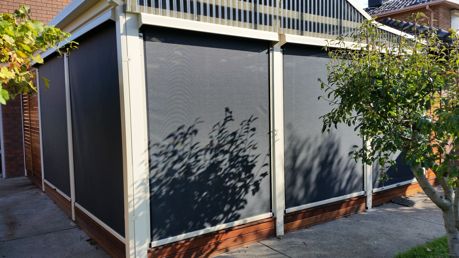
If you are researching Ziptrak outdoor blinds in Melbourne, you are probably weighing up whether the premium price tag delivers real value for your alfresco or patio. The short answer is yes – but only when you choose a genuine system, installed correctly, and matched to Melbourne’s unpredictable weather. This article cuts through the marketing noise. It covers how the track system actually works, what you can realistically expect to pay in mid-2026, how motorised and manual options compare, and whether cheaper alternatives make sense for your home.
Melbourne’s four-seasons-in-one-day reputation is not just a cliche. It genuinely shapes which outdoor blinds perform and which fail within a few years. Understanding that context is the first step toward making a confident buying decision.
What Exactly Is the Ziptrak System?
Ziptrak is a patented outdoor blind system developed in Australia. Its defining feature is a continuous zip mechanism that locks the blind fabric into side channels, or tracks, on both sides of the installation. This design eliminates the fabric flutter and billowing that plagues standard external blinds.
Furthermore, the spring-balanced operation means the blind can stop and stay at any height without a lock or clip. That smooth, one-handed operation is a genuine functional advantage. According to the manufacturer, the system uses no ropes, no straps, and no zips in the conventional sense – the term “Ziptrak” refers specifically to the patented guide track system, not a zipper closure.
Verified Fact
Ziptrak is an Australian-owned brand. The system is patented in Australia. Independent retailers are required to source genuine components through authorised distribution channels to maintain the product warranty. Source: Ziptrak Australia.
Additionally, the system works with a range of fabric types. PVC fabrics offer maximum weather resistance and privacy. Mesh and sunscreen fabrics allow filtered light and airflow while still reducing wind and UV exposure. Therefore, homeowners can tailor their selection to their specific outdoor living goals.
You can explore the full range of track-guided outdoor blinds available through DIY Blinds outdoor blinds to understand how the system compares to other options in the product catalogue.
Why Melbourne’s Climate Demands the Right Blind
Melbourne sits in a temperate oceanic climate zone. However, its weather is famously volatile. Summer afternoons can exceed 40 degrees Celsius. Moreover, southerly busters bring sharp temperature drops and wind gusts within hours. Winter months deliver persistent rain, strong winds, and low-angle UV exposure.
Verified Fact – Bureau of Meteorology
Melbourne’s annual average maximum temperature is approximately 20 degrees Celsius. However, summer days regularly exceed 35 degrees. Wind gusts exceeding 70 km/h are not uncommon in suburban Melbourne during storm events. Source: Bureau of Meteorology – Melbourne Climate Data.
Consequently, outdoor blinds in Melbourne must handle UV degradation, high summer heat, wind loading, and seasonal rain. Inferior fabric or weak track systems deteriorate rapidly under those conditions. That is precisely why the track-guided design matters so much in this specific climate.
Track-guided systems, like those available through DIY Blinds, perform significantly better in Melbourne’s wind conditions compared to free-hanging or rope-guided alternatives. The locked-edge design reduces wind-induced movement and associated hardware stress.
Genuine Ziptrak vs Generic Zip Track Systems in Melbourne
This is arguably the most important distinction Melbourne buyers need to understand. The market contains dozens of generic zip track or slide track systems that look similar to Ziptrak at a glance. However, the differences in engineering, materials, and after-sales support are significant.
Genuine Ziptrak
- Patented spring-balance mechanism
- Engineered extrusion-grade aluminium tracks
- Australian warranty support
- Genuine spare parts availability
- Authorised dealer network in Melbourne
- Tested to Australian wind load standards
- Consistent fabric-to-track seal quality
Generic Zip Track Systems
- No patented spring balance
- Variable aluminium quality
- Warranty terms often unclear
- Spare parts may be unavailable after 2-3 years
- No authorised dealer accountability
- Wind load ratings rarely disclosed
- Fabric seal quality inconsistent
Choosing a genuine Ziptrak dealer in Melbourne matters beyond the initial purchase. If a track is damaged or the spring mechanism needs adjustment several years down the line, genuine parts must be accessible. With generic systems, that aftermarket support is rarely guaranteed.
Equally important, some retailers sell rebranded generic systems under names that imply they are genuine Ziptrak products. Always ask specifically whether the product is the patented Ziptrak system or a similar-style alternative. A reputable supplier will answer that question directly.
DIY Blinds offers a range of track-guided outdoor blinds across multiple system types. This allows Melbourne homeowners to make an informed comparison based on performance and budget, not marketing language alone.
Motorised vs Manual Ziptrak Blinds – Which Suits Melbourne Homes?
Both motorised and manual Ziptrak configurations deliver the same patented track performance. The choice between them depends on your lifestyle, the size of your installation, and your budget. Neither option is universally superior – each suits a different type of homeowner.
Manual Systems
Spring-balanced operation makes single-hand use effortless. Stops at any point without locks. Lower upfront cost. No power dependency. Ideal for smaller installations or secondary outdoor areas.
Motorised Systems
Remote or smart home integration available. Ideal for large alfresco enclosures or high-mounted blinds. Wind sensors can automate retraction during gusts. Higher upfront cost but adds significant convenience.
Additionally, motorised systems increasingly integrate with smart home platforms. If your Melbourne home runs a home automation system, motorised outdoor blinds can connect to schedules, weather sensors, or voice control. That convenience factor is difficult to replicate with manual operation across a large alfresco area.
On the other hand, manual systems remain highly practical for most Melbourne homes. The spring balance mechanism means operating a large blind requires minimal effort. Furthermore, manual systems eliminate any risk of motor failure or power outage affecting usability.
Verified Industry Reference
Motorised outdoor blind systems are classified under the Australian standard AS/NZS 2080:2006 for safety requirements of domestic blinds and related products. Motorised systems must comply with additional electrical safety requirements under Australian law. Source: Standards Australia.
For detailed guidance on which motorised or manual option suits your specific outdoor space, contact DIY Blinds directly for a Melbourne-specific consultation.
Transforming Alfresco Spaces Across Melbourne
Ziptrak blinds have become one of Melbourne’s most popular solutions for alfresco enclosures. Their ability to span large openings without a centre post is a significant design advantage. A single blind panel can cover up to approximately six metres in width, creating an unobstructed view when open and a fully enclosed space when closed.
Moreover, the track system creates a seal tight enough to meaningfully reduce wind-driven rain from entering the space. While no outdoor blind is fully waterproof in extreme Melbourne downpours, a well-installed Ziptrak system keeps most weather out during typical rain events. This makes alfresco entertaining genuinely feasible year-round.
Beyond weather protection, a fully enclosed alfresco space adds usable square metres to your home. Melbourne’s competitive property market means that functional outdoor living areas genuinely contribute to lifestyle value and, in many cases, resale appeal. According to research by realestate.com.au, outdoor entertaining areas consistently rank among the top five features buyers seek in Melbourne homes.
Additionally, outdoor blinds paired with window awnings create a layered sun and wind management system. This combination works particularly well on Melbourne’s north and west-facing facades, where summer afternoon sun is most intense.
Cafe Blinds vs Ziptrak for Alfresco Use
Some Melbourne homeowners consider cafe blinds as a lower-cost alternative for patio enclosures. However, the functional difference is notable. Cafe blinds use a rope-guided or free-hanging system that allows wind to push the fabric inward. Ziptrak’s track-guided design eliminates that movement entirely.
Consequently, for a primary alfresco enclosure that you intend to use regularly in Melbourne’s variable conditions, Ziptrak delivers a noticeably superior experience. Cafe blinds remain a practical and cost-effective option for secondary areas or for homeowners with a tighter budget. DIY Blinds supplies both – explore cafe blinds to compare.
Understanding the Real Cost of Ziptrak Blinds in Melbourne
Disclaimer: The price ranges below represent general market estimates current as of mid-2026. They are indicative only. Actual costs vary significantly based on size, fabric type, motorisation, site conditions, and installer. Always request a current, itemised quote from your supplier before making purchasing decisions.
Pricing for outdoor blinds in Melbourne varies widely. Ziptrak sits at the premium end of the market – and for good reason. The patented mechanism, Australian warranty, and quality materials all carry a cost premium over generic alternatives.
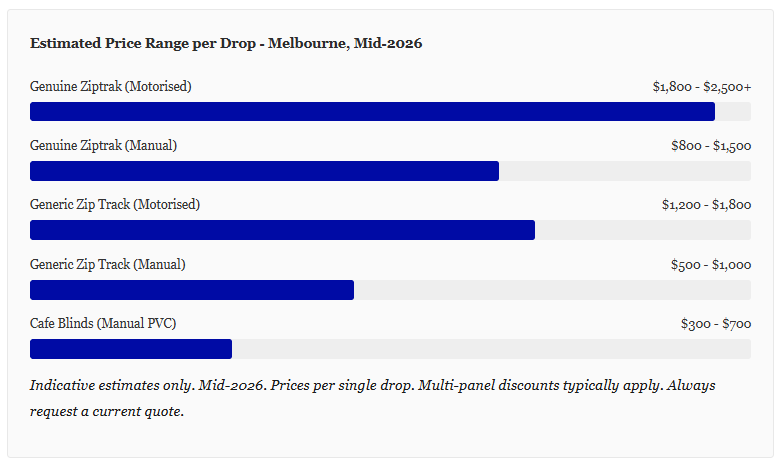
Beyond the blind cost itself, installation adds to the total investment. Professional installation in Melbourne typically adds between $200 and $600 per drop depending on site access, structural fixing requirements, and the number of panels involved. Complex alfresco enclosures with multiple drops may attract higher installation fees.
However, consider the long-term picture. A genuine Ziptrak system installed correctly typically lasts 10 to 15 years with proper maintenance. A generic system installed at half the price and replaced after five years works out costlier overall. That total cost of ownership calculation shifts the value equation significantly in favour of the genuine product.
For Melbourne homeowners wanting a precise quote, contact DIY Blinds for a no-obligation measure and quote.
Professional Installation of Ziptrak Blinds Across Melbourne
Correct installation is critical to the performance of any track-guided outdoor blind system. The track channels must be perfectly plumb and parallel. Even minor misalignment causes the fabric to bind, track unevenly, or fail to seal properly against wind and rain.
Furthermore, structural fixing is a safety consideration. Outdoor blinds are exposed to wind loading. If tracks or head boxes are fixed to inadequate substrates – or with insufficient fixing points – there is a genuine risk of failure in strong wind events common to Melbourne. A qualified installer understands fixing requirements for timber, masonry, steel, and composite substrates.
Additionally, warranty validity for genuine Ziptrak products typically requires installation by a qualified and authorised installer. DIY installation, while technically possible for experienced homeowners, can void warranty coverage and introduce alignment errors that affect long-term performance.
What to Expect During Installation
- Site measure and confirmation of dimensions
- Substrate assessment for fixing suitability
- Track and headbox fixing to structure
- Fabric insertion and zip engagement
- Spring balance adjustment for smooth operation
- Motorisation wiring and control setup (if applicable)
- Operation demonstration and handover
A professional installation typically takes two to four hours per panel, depending on complexity. Multi-panel alfresco enclosures may require a full day’s work. Plan for the installer to need clear access around the installation area.
Ziptrak Warranty, Durability, and Long-Term Value in Melbourne
Warranty terms for Ziptrak products are an important consideration in Melbourne’s variable climate. Genuine Ziptrak products come with manufacturer warranty coverage that generic systems simply cannot match. The warranty typically covers manufacturing defects in components and hardware.
Important Note on Warranty
Warranty terms and durations vary by product type, retailer, and installation conditions. Always request written warranty documentation from your supplier before purchasing. Warranty claims for outdoor blinds in Australia are also subject to Australian Consumer Law rights. Source: Australian Competition and Consumer Commission (ACCC).
Beyond the formal warranty period, genuine Ziptrak components are available through the authorised dealer network. That means repairs and part replacements remain feasible long after the warranty expires. Consequently, the system’s effective useful life extends well beyond what the warranty period alone suggests.
How Long Do Ziptrak Blinds Actually Last?
Longevity depends on three factors: fabric quality, installation quality, and maintenance. In Melbourne’s UV-intense summers, fabric degradation is the most common cause of premature failure. High-quality PVC or mesh fabrics with UV stabilisers typically retain structural integrity for 10 to 15 years under normal Melbourne conditions.
The aluminium track components, when properly maintained, outlast the fabric. Therefore, re-fabrication – replacing just the fabric while retaining existing tracks – is often a cost-effective option at the end of a fabric’s useful life. This further extends the system’s overall value proposition.
For a comparison of system durability across different outdoor blind types, explore the full outdoor blinds range at DIY Blinds.
Cheaper Alternatives to Ziptrak Blinds – When They Make Sense
Not every Melbourne outdoor area requires a premium Ziptrak system. Understanding when an alternative genuinely makes sense saves money without compromising on what actually matters for your specific use case.
Zipscreen and Ezip Systems
Both Zipscreen and Ezip are track-guided systems that offer similar functional benefits to Ziptrak. They use a fabric edge-guided by side channels to reduce wind movement. Pricing typically sits below genuine Ziptrak, making them attractive for budget-conscious Melbourne buyers who still want track-guided performance.
DIY Blinds offers Zipscreen and Ezip systems alongside the Ziptrak range. A side-by-side consultation helps clarify which system matches your performance needs and budget.
Slide Track Systems
Slide track blinds use a channel system without the spring-balance mechanism of Ziptrak. They are generally more affordable and work well in lower-wind or sheltered Melbourne locations. However, they lack the stop-anywhere convenience of Ziptrak’s spring balance, and track sealing is typically less precise.
Cafe Blinds
Cafe blinds remain a practical, cost-effective option for Melbourne homeowners who want weather protection without a full enclosure system. They suit secondary areas like a side pergola or a small balcony. For a primary alfresco entertaining space in Melbourne’s weather, however, the performance gap versus a track-guided system is significant.
Browse cafe blinds from DIY Blinds to explore this more affordable option.
Roller Shutters
For maximum weather protection, security, and insulation, roller shutters go well beyond what any outdoor blind can deliver. DIY Blinds offers residential roller shutters including Curved, Storm Shield, and Fire Shield options. These suit Melbourne homes needing enhanced protection beyond a standard outdoor blind system.
Maintenance Tips for Ziptrak Blinds in Melbourne’s Climate
Regular maintenance significantly extends the life of any outdoor blind system. Melbourne’s combination of UV exposure, occasional bushfire smoke, and salt-laden coastal winds in bayside suburbs means consistent care matters more than in less variable climates.
Routine Care Checklist
- Clean fabric surfaces with mild soapy water every three to six months
- Rinse tracks with fresh water to remove dust and debris
- Inspect zip edges for wear or fraying annually
- Lubricate track channels with a silicone-based lubricant as recommended by your installer
- Check fixing hardware annually for corrosion or loosening
- Retract blinds fully during extreme Melbourne wind events where possible
- Avoid using high-pressure washers directly on fabric or track seals
Additionally, if you notice the spring balance becoming harder to operate or the fabric tracking unevenly, schedule a service call promptly. Minor adjustments made early prevent costly repairs later.
Frequently Asked Questions About Ziptrak Outdoor Blinds in Melbourne
The Final Word on Ziptrak Outdoor Blinds in Melbourne
After examining every dimension of the decision, Ziptrak outdoor blinds in Melbourne represent a genuinely sound investment for homeowners who are serious about their alfresco or patio space. The patented track system, Australian warranty support, and long operational lifespan outperform generic alternatives over any meaningful time horizon.
However, the key is buying genuine. Choosing a genuine Ziptrak dealer in Melbourne, with professional installation and clear warranty documentation, is what separates a system that performs for 15 years from one that disappoints within three. That distinction is worth every additional dollar of the price premium.
Furthermore, Melbourne’s climate genuinely demands a quality outdoor blind system. The combination of summer UV intensity, autumn wind events, winter rain, and spring temperature swings tests every component of an outdoor blind installation year after year. Compromising on that fundamental quality to save money upfront rarely works out economically.
If budget is a genuine constraint, Zipscreen, Ezip, or slide track alternatives from a reputable Melbourne supplier offer a credible middle ground. Even cafe blinds serve a practical purpose in the right application. What matters is matching the right system to your specific needs, budget, and site conditions – rather than defaulting to the cheapest option available.
DIY Blinds, located in Hoppers Crossing and serving all of Melbourne, supplies and installs the full range of outdoor blind systems including Ziptrak, Zipscreen, Ezip, slide track, and cafe blinds. The team also offers window awnings and roller shutters for complete outdoor weather management.