

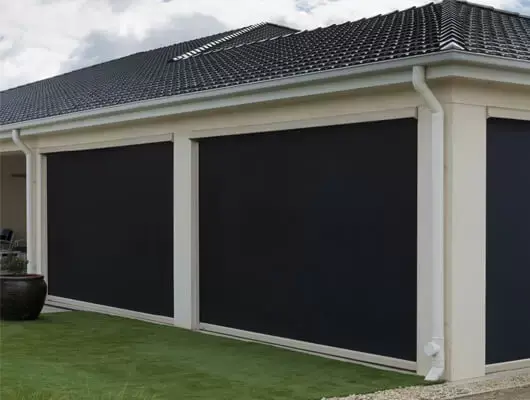
If you’ve typed “Ziptrak blinds” into Google, you’re already two steps ahead of most outdoor living projects — because you’re asking the right question first. Ziptrak outdoor blinds have become arguably Australia’s most searched and most talked-about outdoor blind solution, and for good reason: they solve a problem that standard outdoor roller blinds and traditional café blinds simply can’t — keeping your patio or alfresco area genuinely liveable in wind, glare, rain, and forty-degree heat without the fabric turning into a ship’s sail the moment a Fremantle Doctor rolls through or a southerly buster hammers the deck.
But here’s what most guides don’t tell you: Ziptrak is a brand name, not a generic product category. There are meaningful differences between Ziptrak, Zipscreen blinds, and the broader world of outdoor patio blinds — and choosing the wrong one for your climate, your pergola structure, or your specific use case can leave you with a system that underperforms or deteriorates in just a couple of seasons.
This guide is built on real market research, real installer knowledge, and the honest buying experience that Australians across every state deserve before committing to an outdoor blind purchase. Whether you’re looking at a full professional supply-and-install, a cost-saving DIY outdoor blind project, or you’re comparing Ziptrak outdoor blinds against café blinds for a small courtyard — you’ll have a clear, confident answer by the end of this page.
1. What Are Ziptrak Blinds — and Why Does Australia Love Them?
Ziptrak is a patented outdoor blind system developed in Australia and manufactured to suit the unique demands of the Australian outdoor living environment. The defining feature of a Ziptrak blind is its track-guided, spring-balanced mechanism: the fabric edges are channelled into aluminium side tracks via a zip-like cord system, and a spring counterbalance allows the blind to be raised or lowered to any position — and stay there without locking latches, clips, or tie-down straps.
That spring-balance is what separates a Ziptrak outdoor blind from a conventional outdoor roller blind at a fundamental level. With a standard outdoor roller blind, the fabric hangs freely between two side channels (or with no side guidance at all) — which means wind catches the bottom of the fabric and causes it to billow, flap, and eventually fatigue and tear at the stress points. In the Australian context — where afternoon sea breezes, thunderstorm gusts, and cyclonic conditions are all part of the seasonal calendar — this is a real, recurring problem.
Key Ziptrak Features
Track-guided side channels eliminate wind-driven fabric movement. The spring-balanced barrel means no heavy lifting. The system operates without tools, locks, or tie-downs — making it genuinely easy to adjust throughout the day as sun and wind conditions change.
Why Australians Are Searching for Ziptrak in 2026
Australian Google Trends data heading into 2026 shows consistent year-round demand for track-guided outdoor blinds, with peak search volumes in:
- September–November — spring preparation for alfresco entertaining season across Victoria, NSW, and SA
- February–April — post-summer replacement cycles and end-of-financial-year renovations
- June–July — Queensland and WA buyers seeking winter weather protection for alfresco spaces
Long-tail queries with high intent include: “Ziptrak blinds Australia,” “Ziptrak vs Zipscreen which is better,” “can I install Ziptrak myself,” “outdoor blinds for windy areas Australia,” and “track guided outdoor blinds DIY.” These are the questions this guide is built to answer in full.
95%
UV blockage available in premium mesh fabrics
50+
km/h wind resistance with track-guided systems
10–15
year expected lifespan for quality outdoor blind systems
4.4M
Australian properties in bushfire-prone areas in 2026
2. Ziptrak vs Zipscreen Blinds: The Real Differences
This is the comparison question that almost no other guide answers honestly. “Ziptrak” and “Zipscreen” get used interchangeably by homeowners, builders, and even some retailers — but they’re distinct systems with real differences in mechanism, fabric range, and suitability for different applications.
How Each System Works
Ziptrak
The Ziptrak system uses a spring-balanced barrel (think of a roller blind barrel with an internal spring that counterbalances the fabric weight). The fabric’s edges run inside an aluminium track via a beaded cord sewn into the fabric selvedge. You push the blind down from the head rail — or pull it up — and release. The spring holds it in place at any height. No locking mechanism required.
Zipscreen Blinds
Zipscreen is a competing track-guided system — also Australian in origin — that uses a motorised or manually operated roller mechanism. The distinguishing technical difference is in how tension is applied to the zip-edge cord: Zipscreen systems use a constant-tension drum in motorised versions and a crank handle on manual models. This gives Zipscreen a slight edge in very wide applications (openings over 4.5 metres) where spring-balance tension can be harder to calibrate. Zipscreen is also widely known for a broad proprietary fabric library and strong motorisation ecosystem.
The Bottom Line Comparison
Ziptrak is often the smoother, more user-friendly option for everyday manual operation in residential settings. Zipscreen typically offers more fabric options and is arguably better suited to very wide openings and commercial applications. Both are quality Australian outdoor blind systems — but they’re not interchangeable, and your choice should be guided by opening width, motorisation requirements, and the specific demands of your outdoor space.
| Feature | Ziptrak | Zipscreen |
|---|---|---|
| Operating Mechanism | Spring-balanced barrel (push/pull, no locking) | Constant-tension drum; crank handle (manual) or motor |
| Best Width Range | Up to ~4.2 m per drop | Up to 5.5 m+ per drop (motorised) |
| Motorisation | Available (Somfy, Rollease compatible) | Widely available; native integration |
| Fabric Range | Broad — mesh, PVC, blockout | Very broad — proprietary fabric library |
| Wind Resistance | High — track guidance at edges | High — equivalent edge-zip system |
| DIY Feasibility | Moderate — doable with confidence | Moderate — similar; motor wiring adds complexity |
| Australian Origin | Yes | Yes |
For most residential alfresco areas — decks, pergolas, and undercover entertaining areas between 2.5 m and 4 m wide — either system will perform admirably. The decision usually comes down to whether you want a smooth spring-operated manual system (Ziptrak) or you’re going fully motorised from the start (where Zipscreen has a slight advantage in integration).
3. All Outdoor Blind Types Compared: Which One Do You Actually Need?
The Australian outdoor blind market has more options than most homeowners realise, and the names can be confusing — especially when retailers use different terminology for similar products. Here’s a clean breakdown of every category you’re likely to encounter.
Track-Guided Outdoor Blinds (Ziptrak / Zipscreen Style)
As covered above, these use side tracks to guide the fabric edges and prevent wind-driven movement. They’re the premium end of the outdoor blind market and represent the best all-round solution for Australian alfresco areas exposed to variable wind, heat, and rain. Both manual and motorised configurations are available.
Best for: Decks, pergolas, alfresco rooms, outdoor kitchens, and anywhere with regular wind exposure or where you need the blind to hold position reliably throughout the day.
Standard Outdoor Roller Blinds
Outdoor roller blinds operate on the same basic principle as interior roller blinds: a fabric wraps around a barrel that sits in a head rail bracket, and the blind is lowered or raised via a spring mechanism, chain, or motor. The key difference from track-guided systems is that the fabric edges hang freely — there are no side channels.
This makes outdoor roller blinds a more accessible entry point, and in sheltered positions (facing a north-facing wall, in a recessed pergola bay, or in low-wind environments) they perform well. However, in exposed positions or coastal areas, the free-hanging fabric edges will billow in wind, creating noise, fabric stress, and eventual edge fraying.
Best for: Sheltered, low-wind positions; rental properties; temporary or seasonal installs.
→ Browse our outdoor roller blinds range — made-to-measure with a wide fabric selection.
Café Blinds
Café blinds are a uniquely Australian outdoor blind staple — you’ll find them on restaurant terraces, pub beer gardens, caravan annexes, and suburban pergolas across the country. They’re typically made from clear PVC (0.5 mm–1.0 mm gauge), sometimes with a fabric surround or binding, and they hang on a simple cord-and-hook or velcro system.
The name comes from their ubiquitous use in hospitality — café blinds allow patrons to remain outdoors in light rain or cool weather while keeping the alfresco space visible and open-feeling. They’re among the most straightforward outdoor blind options to DIY-install.
The downsides: clear PVC yellows and becomes brittle with prolonged UV exposure (typically within 3–7 years depending on UV intensity and fabric quality); they don’t provide meaningful sun shading; and they offer no privacy.
Best for: Rain and wind protection where visibility and light transmission matter; hospitality and commercial use; caravan and camping annexes; short-term or rental-property use.
Outdoor Patio Blinds (Combination Systems)
“Outdoor patio blinds” is an umbrella term that covers everything from standard roller blinds to track-guided systems when they’re applied to a patio or pergola setting. In practice, Australian homeowners searching for “outdoor patio blinds” are typically looking for a complete blind solution for their undercover entertaining area — and that usually means a track-guided system, a mesh fabric outdoor roller blind, or a combination of both for a multi-bay pergola.
| Type | Wind Resistance | UV / Heat Block | Privacy | DIY-Friendly |
|---|---|---|---|---|
| Ziptrak / Zipscreen | ★★★★★ | ★★★★★ | ★★★★☆ | ★★★☆☆ |
| Outdoor Roller Blind | ★★★☆☆ | ★★★★☆ | ★★★★☆ | ★★★★★ |
| Café Blinds (Clear PVC) | ★★★☆☆ | ★☆☆☆☆ | ★☆☆☆☆ | ★★★★★ |
| Motorised Track-Guided | ★★★★★ | ★★★★★ | ★★★★☆ | ★★☆☆☆ |
4. Buying Outdoor Blinds for Your Australian Climate: A State-by-State Guide
One of the biggest gaps in most online outdoor blind guides is regional specificity. A blind that’s perfect for a Melbourne pergola is not necessarily the best choice for a Darwin outdoor room or a Sunshine Coast deck. Australian climates are dramatically different — and your outdoor blind needs to be chosen accordingly.
Queensland
High UV intensity, tropical humidity in the north, cyclonic winds in coastal areas. Prioritise 95%+ UV-rated mesh fabrics. For north Queensland, heavy-duty clear PVC café blinds offer wet-season rain protection while maintaining tropical breezes. Track-guided systems are essential for any exposed north-facing position. Anti-mould fabric treatment is important in humid coastal zones.
New South Wales
Coastal Sydney properties face regular afternoon sea breezes and southerly busters — track-guided outdoor blinds strongly recommended for any east or south-facing aspect. Inland areas (Orange, Bathurst) need good insulation for cold winters. The Southern Highlands benefits from a heavier fabric weight for thermal retention in autumn and winter.
Victoria
Melbourne’s “four seasons in one day” weather makes versatile outdoor blinds critical. Wind-resistant track-guided systems are a strong choice. For bayside suburbs, corrosion-resistant aluminium track components are essential. A mesh fabric that blocks summer heat while allowing air circulation in spring and autumn is ideal. Consider motorised options for ease in variable weather.
South Australia
Adelaide heatwaves regularly exceed 40°C. A high-density mesh fabric (80–95% UV/heat blockage) is critical for western-facing alfresco areas. Bushfire smoke is an increasing seasonal concern — a fabric that can be lowered quickly to block smoke ingress adds genuine year-round value. Fire-rated fabrics are worth specifying in Hills Face Zone properties.
Western Australia
The Fremantle Doctor (afternoon south-westerly sea breeze) is a defining feature of Perth’s summer. It brings welcome cool air but also drives significant wind loads on outdoor blinds. Track-guided systems are almost essential in the western suburbs. In the Pilbara and Kimberley regions, extreme UV and cyclonic-rated wind loads require premium specification systems.
Tasmania & ACT
Cold winters and significant rainfall mean outdoor blinds here are often used for weather enclosure as much as sun protection. Heavier clear PVC café blinds or mesh outdoor roller blinds with a close-fitting bottom bar are popular for trapping warmth in alfresco areas. UV levels, while lower than mainland cities, still warrant UV-rated fabrics.
Bushfire Smoke: The Emerging Blind Use Case in 2026
Increasing frequency of major bushfire events across eastern and southern Australia has created a new use case for outdoor blinds that most guides completely ignore: smoke containment. A quality mesh or PVC outdoor patio blind, when fully lowered, significantly reduces the ingress of smoke particles into an alfresco or outdoor kitchen area. This is now a genuine buying consideration for properties in or near bushfire-prone zones across NSW, VIC, SA, and WA. Look for fabrics with a tight weave (openness factor below 3%) for the best smoke-reduction performance.
5. The Fabric Guide Nobody Else Gives You
Fabric choice is arguably more important than the hardware system for long-term performance and satisfaction. Most guides list fabric types without explaining what the specifications actually mean for your daily experience. Here’s the plain-English breakdown.
Mesh (Screen) Fabric
The most popular fabric for Ziptrak outdoor blinds and outdoor roller blinds across Australia. Mesh fabrics are woven from UV-stabilised fibreglass or polyester yarns coated in PVC. The key specification is the openness factor — the percentage of the fabric that is open to airflow.
- 1–3% openness: Near-opaque; maximum UV and heat blockage (95%+); near-full privacy; minimal airflow. Best for hot western-facing aspects.
- 3–5% openness: The most popular all-round choice. Good UV blockage (88–94%), reasonable privacy from outside, and comfortable airflow. Outward visibility retained.
- 5–10% openness: Good visibility through the fabric; strong airflow; lower heat and UV blockage. Best for cooler aspects or where ventilation is a priority.
Quality mesh fabrics for Australian outdoor applications should be rated to AS 2663 (resistance to abrasion and UV degradation) and should carry a minimum 5-year manufacturer warranty on colour and UV stability.
Clear PVC (Café Blind Fabric)
Standard clear PVC is the traditional café blind material and remains popular for its light transmission and weather protection. Key grades:
- 0.4–0.5 mm gauge: Light-duty; suitable for sheltered, low-wind positions. Prone to creasing in cold weather.
- 0.7 mm gauge: Mid-range; the most common grade for residential café blinds. Good all-round performance.
- 1.0 mm gauge: Heavy-duty; used in commercial hospitality and in areas with strong wind exposure. More rigid — maintains a flatter appearance.
Important note: All clear PVC will yellow and become brittle over time under Australian UV exposure. UV-inhibited grades perform significantly better, but even premium PVC café blind fabric will require replacement within 7–12 years in high-UV environments.
Blockout Fabric
Outdoor blockout fabrics — typically a coated polyester or acrylic — provide complete privacy and maximum heat rejection. They’re popular in outdoor cinema setups and for alfresco bedrooms or sleep-out areas. Trade-off: no airflow whatsoever, which can create a significant heat build-up behind the blind in summer unless adequate ventilation is provided at the top of the drop.
Fire-Rated Fabric
In bushfire-prone areas, some mesh and PVC fabric options carry a fire-rated designation. These fabrics comply with Australian Standard AS 1530.2 (fire-hazard properties of building materials) and are specified for properties within BAL-12.5 to BAL-29 zones. Confirm compliance requirements with your local council and building certifier before specifying for a BAL-rated property.
6. DIY Outdoor Blind Installation: What’s Realistic and What’s Not
The popularity of DIY outdoor blinds in Australia has grown significantly — driven by the availability of made-to-measure online suppliers (like us at DIY Blinds), quality installation guides, and the genuine savings on a multi-bay pergola project where professional installation can add $300–$600 per blind to the total cost.
Here’s an honest assessment of what’s DIY-appropriate and what genuinely benefits from a professional.
What You Can Confidently DIY
- Standard outdoor roller blinds — mounting a head rail bracket to timber or steel is within reach of any confident homeowner with a drill and a level
- Café blind systems — typically the simplest of all outdoor blind DIY projects; most use hook-and-eye or track rail systems with minimal fixings
- Track-guided blind brackets and rail fixings — if you’re comfortable with masonry drilling and working off a ladder, the bracket installation for Ziptrak-style systems is manageable
- Fabric and barrel assembly — for made-to-measure DIY outdoor blinds, the barrel and fabric unit arrives pre-assembled; you’re just mounting the brackets and sliding the unit into place
Where Professional Help Is Genuinely Worth It
- Motorised blind wiring — 240V wiring work must be done by a licensed electrician in all Australian states. Low-voltage DC motor systems (12V or 24V with a transformer) can be DIY-connected, but confirm your motor specifications first
- Masonry into double-brick or concrete — this requires the right drill, the right anchors, and the right technique; getting it wrong means loose brackets and a warranty-voiding installation
- Very wide drops (over 4 m) and heavy fabric weights — these are genuinely two-person jobs at minimum, and a professional has the tools and scaffolding for safe and accurate installation at height
- Structural changes to the pergola — if your outdoor blind installation requires new fixing points in the structure itself (new top rails, additional noggins, or post modifications), that’s a builder’s domain
Important: Check Your Council Requirements
In many Australian councils, enclosing an alfresco area with outdoor blinds — particularly where the blinds are fixed and form a substantially enclosed room — may require a development application or building approval. Check with your local council before committing to a full perimeter blind installation, especially if the alfresco area is attached to the dwelling. The Australian Building Codes Board provides general guidance on habitable space and outdoor enclosure requirements.
7. How to Measure for Outdoor Patio Blinds (Step-by-Step)
Incorrect measurement is the number-one cause of blind returns, fitment issues, and installation problems. Follow these steps carefully and you’ll get it right the first time.
Determine Your Fit Type: Face-Fix or Inset
Face-fix: The blind head rail mounts to the face of your beam, fascia, or top rail — spanning the full width including any posts. Measure from the outer face of one post to the outer face of the other.
Inset (between-post): The blind sits inside the bay, between the posts. Measure the clear opening width inside the posts.
Measure Width in Three Positions
Measure the width at the top, middle, and bottom of your opening. Openings are rarely perfectly parallel. For inset fits, use the smallest measurement to ensure the blind fits without jamming. For face-fix, use the measurement at head rail height and confirm posts are truly vertical before adding any overlap allowance.
Measure the Drop
Measure from the underside of your beam or top rail fixing point to the surface you want the blind to reach (floor, deck, or bottom rail). If you want the blind to sit 20–30 mm above the floor (recommended to prevent moisture wicking and base bar damage), subtract that gap from your total drop measurement.
Account for Hardware and Clearances
Track-guided systems require side tracks that run from just below the head rail to the bottom of the drop. Allow 15–20 mm clearance on each side of the fabric for the track housing. The head rail itself adds 80–120 mm to the overall height of the installation — confirm this fits below your beam or roof line.
Note Your Wall/Post Material
Record whether you’re fixing into timber, steel, masonry, or aluminium. This determines the type of fastener and anchor required. For masonry, specify a minimum M8 masonry bolt or similar structural anchor — do not use spring toggles or lightweight plasterboard anchors for outdoor blind brackets under any circumstances.
Double-Check Before Ordering
Made-to-measure outdoor patio blinds cannot be returned once manufactured if the measurements are incorrect. Measure twice; order once. If in any doubt, our team at DIY Blinds is available to review your measurements before you place your order.
8. Bushfire Zones and Blind Compliance in Australia
This is a section that competitor guides almost universally omit — and it’s genuinely important for a significant proportion of Australian homeowners. As of 2026, approximately 4.4 million Australian properties are located in designated bushfire-prone areas, and the requirements around materials used in construction and renovation — including window and door coverings — are increasingly significant.
Understanding BAL Ratings
BAL stands for Bushfire Attack Level. It’s a measure of potential ember attack, radiant heat, and flame exposure for a building in a given location. The ratings are: BAL-LOW, BAL-12.5, BAL-19, BAL-29, BAL-40, and BAL-FZ (Flame Zone — highest risk).
For outdoor blinds, the relevant standard is AS 3959:2018 — Construction of Buildings in Bushfire-Prone Areas. Under this standard:
- BAL-12.5 to BAL-19: External blinds and shutters should be constructed from non-combustible materials or tested against fire-related performance criteria
- BAL-29 to BAL-40: More stringent requirements apply; most standard PVC and polyester fabrics will not comply — you need fire-rated fabric and non-combustible track and hardware components
- BAL-FZ: Outdoor blinds are generally not appropriate in Flame Zone — the focus is on structural resistance, and most soft-furnishing products are excluded
Always Verify with Your Council
BAL ratings are property-specific and determined by a qualified assessor. Never assume your BAL rating — always confirm with your local council and a certified BAL assessor before selecting materials. Installing non-compliant materials in a bushfire-prone area can void your home insurance and create personal liability issues. The Australian Window Association (AWA) publishes guidance on compliant window and external shading products for BAL-rated properties.
9. Frequently Asked Questions
These are the real questions Australians are asking about Ziptrak blinds, Zipscreen blinds, outdoor patio blinds, and DIY outdoor blind installation in 2026 — answered without the marketing fluff.
The Bottom Line: Choosing the Right Outdoor Blind for Your Australian Space in 2026
Ziptrak outdoor blinds are Australia’s most popular track-guided outdoor blind system for a reason: they solve the wind-stability problem that plagues standard outdoor roller blinds, they operate smoothly without tools or hardware, and they’re built specifically for Australian climate conditions. But they’re not the right answer for every situation — and choosing the most premium option without matching it to your actual exposure and opening dimensions can mean paying for performance you simply don’t need.
The right outdoor blind for your space comes down to three core variables: wind exposure, UV and heat requirements, and privacy needs. Use the comparison tables and climate guide in this article to work through those variables honestly, and you’ll arrive at a well-informed decision — whether that’s a Ziptrak outdoor blind system, a Zipscreen blind, a set of mesh outdoor roller blinds, or a simple café blind setup for a sheltered courtyard.
And if you want the quality of a made-to-measure outdoor blind without the retail markup of a showroom, DIY Blinds Australia manufactures and supplies quality outdoor blind systems direct — with the expert guidance to get your measurement, fabric selection, and installation approach right the first time.