

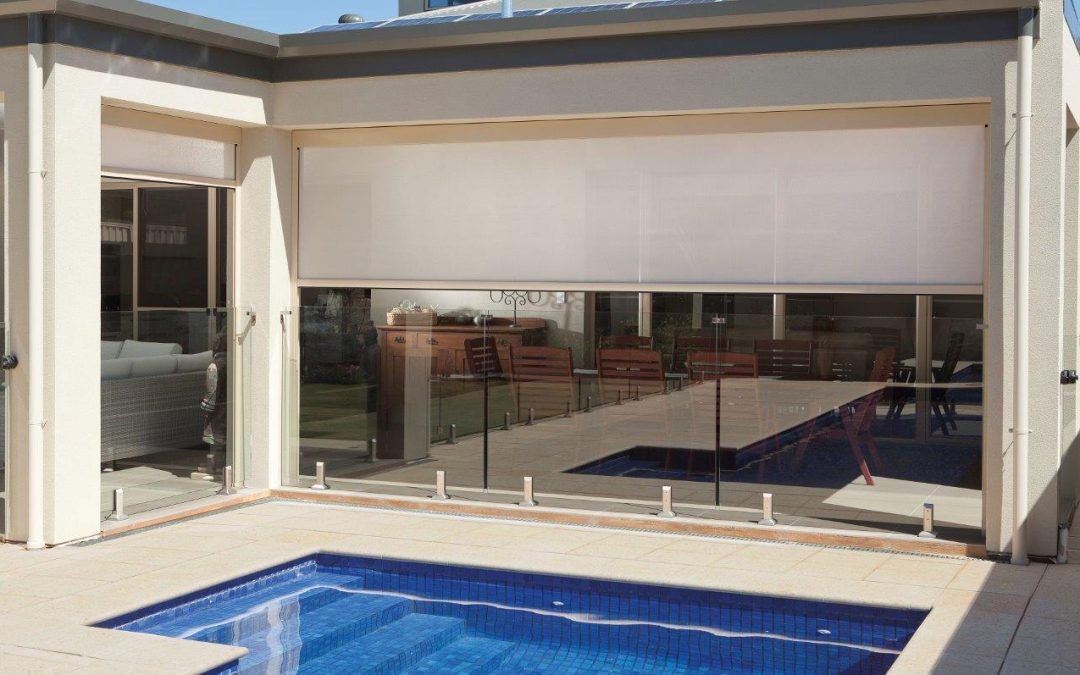
Keep your outdoor blinds looking brilliant and lasting longer with these expert-backed maintenance tips. Built specifically for Australia’s harsh sun, coastal winds, and unpredictable weather.
Look, most Australians invest good money in outdoor blinds and then — fair dinkum — barely give them a second thought until something goes wrong. Whether you’re battling the blazing Queensland sun, salty coastal air in New South Wales, or Melbourne’s four-seasons-in-a-day madness, your outdoor blinds work incredibly hard. These outdoor blind maintenance tips will help you protect that investment, extend the lifespan of your blinds by years, and keep them performing at their absolute best — season after season.
15+
Years lifespan with proper maintenance
50%
Energy savings on cooling costs
20°C
Temperature reduction on patios
Did You Know?
According to Australia’s Energy Rating authority, window coverings including external blinds can reduce solar heat gain by up to 60%, making them one of the most effective passive cooling strategies available for Australian homes.
Why Outdoor Blind Maintenance Matters in Australia
Australia isn’t exactly gentle on outdoor furniture or fittings. Our UV index regularly hits extreme — the highest category on the scale — and we have some of the most punishing solar radiation on the planet, as confirmed by the Australian Radiation Protection and Nuclear Safety Agency (ARPANSA). Add coastal salt air, gum tree pollen, blustery southerly changes, and the occasional hailstorm, and you’ve got a recipe for premature wear.
Proper outdoor blind maintenance isn’t just about keeping things pretty. It directly affects:
- UV fabric integrity — preventing chalking, cracking, and colour fade
- Mechanical components — keeping rollers, springs, and tracks running smoothly
- Mould and mildew prevention — critical in humid coastal areas
- Structural anchoring — ensuring blinds don’t become projectiles in strong winds
- Warranty validity — many manufacturers require documented maintenance
The 5 Pillars of Outdoor Blind Maintenance
Essential care practices for Australian conditions
Regular Cleaning
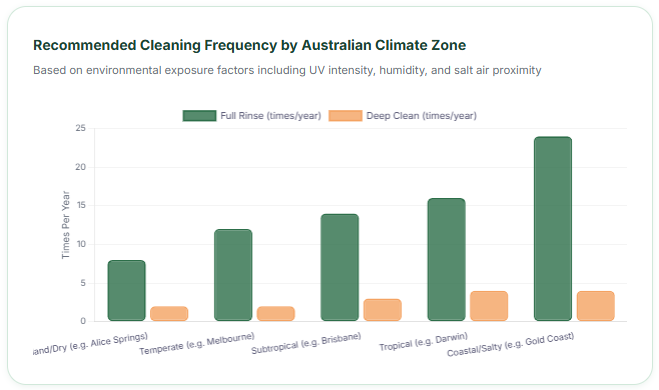
- Monthly rinse with fresh water
- Seasonal deep clean required
- Mild detergent only – no bleach
UV & Weather Protection
- Apply fabric protector spray
- Check UV rating annually
- Roll up during extreme events
Mechanical Care
- Lubricate tracks every 6 months
- Check tension and spring
- Inspect brackets and fixings
Wind & Storm Readiness
- Retract in winds over 40km/h
- Check bottom bar anchor pins
- Inspect zip tracks for alignment
Seasonal Inspection
- Full check-up 4 times a year
- Pre-summer prep is critical
- Log issues and repair promptly
OutdoorBlindsAU.com.au | Based on industry best practices and manufacturer guidelines
How to Clean Outdoor Blinds: Step-by-Step
Cleaning is the single most important thing you can do to extend the life of your outdoor blinds. It removes salt, grime, bird droppings, pollen, and organic matter that accelerates UV degradation and promotes mould growth — particularly in the steamy summers of Brisbane, Darwin, and coastal Queensland.
Before You Start Cleaning
Never use a high-pressure washer directly on outdoor blind fabric. The force can damage the weave, strip UV coatings, and force water into the roller mechanism. A garden hose on a gentle setting is your best mate here.
Routine Monthly Cleaning
1. Lower the Blind Fully
Extend the blind to its full drop so you can access the entire fabric panel. Make sure the bottom bar is secured to prevent the blind from swinging in any breeze while you work.
2. Hose Down with Fresh Water
Using a garden hose, gently rinse the fabric from top to bottom. This removes loose dust, pollen, and surface grime. For coastal homes, this step alone — done monthly — can dramatically slow salt corrosion on your hardware.
3. Mix a Mild Cleaning Solution
Combine a small amount of pH-neutral dish soap or purpose-made outdoor fabric cleaner with warm water in a bucket. Avoid bleach, harsh solvents, or abrasive cleaners — they strip UV inhibitors from the fabric.
4. Scrub Gently with a Soft Brush
Using a soft-bristled brush (not a stiff deck brush), work the solution into the fabric in circular motions. Pay particular attention to the bottom bar area and the edges near the zip tracks where mould tends to collect.
5. Rinse Thoroughly
Rinse completely with the hose until no soap residue remains. Leftover detergent attracts dirt and can cause fabric discolouration over time.
6. Allow to Dry Before Rolling Up
This is crucial. Never roll a wet or damp blind. Moisture trapped inside the roller creates a perfect environment for mould and mildew — the kind that’s nearly impossible to remove once established. Let it air dry fully in an extended position.
Seasonal Deep Clean
Beyond the monthly rinse, a proper deep clean at least twice a year — ideally before summer and before winter — will keep your blinds performing brilliantly. For the deep clean, you’ll want to also:
- Clean inside the headbox housing (remove any insect nests, cobwebs, or debris)
- Wipe down the roller mechanism with a dry cloth
- Clean the bottom bar channels where dirt accumulates
- Inspect and clean the zip track channels using a soft cloth
- Apply a silicone-based lubricant to all moving metal parts after cleaning
Tackling Mould and Mildew on Outdoor Blinds
Mould is the nemesis of outdoor blinds in humid Australian climates. It’s particularly common in the subtropical regions — think the Gold Coast, Sunshine Coast, northern NSW, and Darwin — where warm temperatures and high humidity combine to create ideal growing conditions.
Mould appears as dark spots or grey-green patches, often along seams, bottom bars, and in zip track channels. Musty smell when unrolling is another giveaway. Catch it early and it’s manageable.
Mix one cup of white vinegar with one litre of warm water. Apply with a soft cloth, leave for 15 minutes, then scrub gently and rinse. For PVC blinds, a diluted Milton (sodium hypochlorite) solution at 1:10 can be effective — but always test on a hidden section first.
Always allow blinds to dry fully before rolling up. If you’re leaving for a holiday, roll the blinds up rather than leaving them extended to avoid moisture trapping in a static position.
After cleaning, apply a water-repellent fabric protector spray designed for outdoor textiles. This creates a barrier that makes mould and dirt less likely to take hold in the first place.
What Is the Best Material for Outdoor Blinds in Australia?
Right, this is one of the most common questions we get asked — and it’s a ripper of a question because the answer genuinely depends on where you live and what you need from your blinds. Let’s break it down.
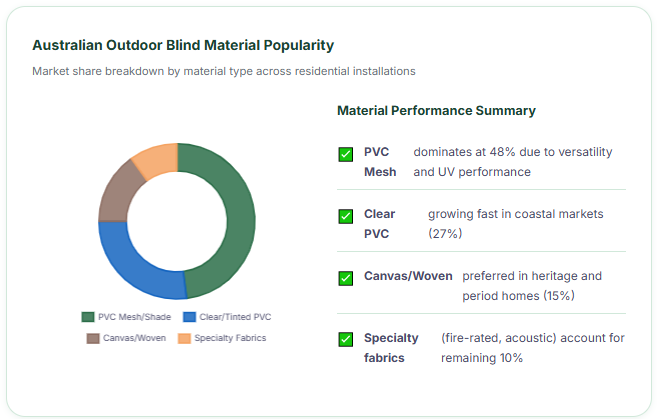
PVC Mesh / Shade Fabric
The most popular choice across Australia. Allows airflow while blocking up to 90% of UV rays. Easy to clean, resistant to mould, and available in dozens of colours and densities.
Best for: Most Climates
Clear / Tinted PVC
Crystal-clear or lightly tinted panels that provide total weather protection while maintaining views. Ideal for alfresco dining areas, restaurants, and coastal entertaining zones.
Best for: Coastal Views
Woven / Canvas Fabric
Traditional and aesthetically warm, woven fabrics suit heritage and Hamptons-style homes. However, they require more maintenance in wet climates and are less suited to salty coastal environments.
Best for: Inland/Dry Areas
Material Comparison Table
What Type of Outdoor Blind Is Best for Wind?
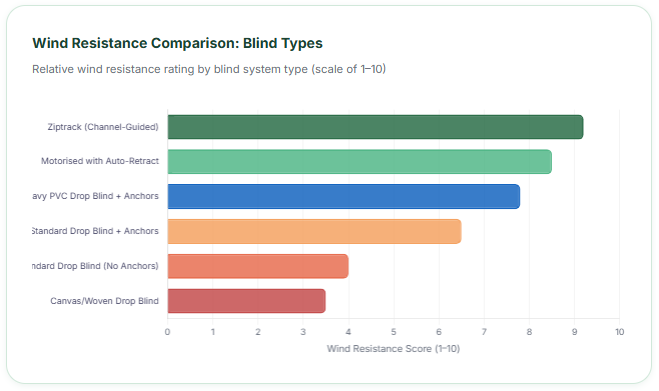
If you’re in a coastal area or anywhere prone to strong southerly busters and afternoon sea breezes — think Sydney’s Northern Beaches, the Mornington Peninsula, or really anywhere in WA — wind resistance is not something you want to muck around with. An improperly secured blind in strong winds can be genuinely dangerous and cause serious damage to your home and the blind itself.
The Clear Winner: Ziptrack / Channel-Guided Blinds
Ziptrack blinds — also called channel-guided roller blinds — thread the fabric into aluminium side channels using a reinforced zip edge. This system locks the fabric in place under wind loads, preventing the billowing, flapping, and eventual tearing that standard drop blinds suffer from.
Pro Tip: Wind Speed Ratings
When purchasing blinds for exposed areas, always ask your supplier for the wind speed rating of the system. Quality ziptrack systems are typically rated for sustained winds of 60–80 km/h when properly installed. Always retract blinds ahead of severe weather events regardless of the rating.
Wind-Related Maintenance Checklist
- After any severe weather event, inspect all fixing bolts and brackets for loosening
- Check zip track channels for debris or misalignment that could cause fabric to jump the track
- Inspect bottom bar end caps for cracks — these commonly fail first in high-wind areas
- Look for any fraying along the zip edge — early fraying indicates the system needs professional adjustment
- Test the retraction mechanism — if it feels sluggish, service before the next storm season
- Ensure anchor pins or floor anchors are rust-free and firmly seated
How Do Outdoor Blinds Attach to a House?
Understanding how your blinds are attached is genuinely important for maintenance — because the attachment points are typically the first things that need attention over time, especially in areas with timber fascias that can swell, crack, or rot.
Outdoor Blind Attachment Methods
Technical diagram: How outdoor blinds connect to your home structure
Fascia Mount
Most common method
Brackets bolt directly into fascia board
Easy access for maintenance
Wall Mount
Used when no fascia board
Requires masonry anchor
Very secure fixing
Beam / Purlin
Ideal for pergolas and verandas with timber or steel roof beams
Great for pergolas
Structural Posts
Freestanding systems with posts concreted or surface-mounted
No structure required
Maintaining Your Blind Hardware and Fixings
The attachment hardware is often overlooked during cleaning routines, but it’s the most critical structural element. Here’s what to check and how often:
Seasonal Outdoor Blind Maintenance Guide
Australia’s seasons vary dramatically from the Top End’s wet and dry cycles to Victoria’s four-in-a-day. Here’s a season-by-season maintenance schedule that works across all Australian climate zones.
Seasonal Blind Maintenance
Maintenance tips for each season to keep your outdoor blinds in perfect condition.
SUMMER (Dec–Feb)
- Monthly rinse to remove salt and pollen
- Retract before severe weather events
- Check UV coating condition
- Inspect for insect nests in headbox
- Clean bottom bar drainage
AUTUMN (Mar–May)
- Deep clean all fabric panels
- Apply fabric protector spray
- Lubricate all mechanical components
- Check and tighten all fixings
- Inspect zip tracks for wear
WINTER (Jun–Aug)
- Check for mould after wet spells
- Ensure blinds dry fully before rolling
- Inspect motor units if motorised
- Treat any rust spots on hardware
- Clear leaves from headbox
SPRING (Sep–Nov)
- Full pre-summer deep clean
- Reapply water-repellent treatment
- Service motor or spring mechanism
- Replace worn seals on PVC panels
- Professional inspection if needed
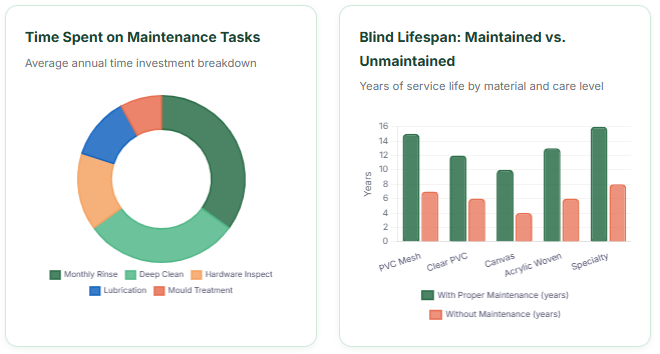
Are Outdoor Blinds Worth It?
Look, we get asked this all the time — and the short answer is: absolutely yes, provided you look after them properly. Let’s look at this from a practical, no-nonsense Australian perspective.
The Return on Investment
The Australian Department of Climate Change, Energy, the Environment and Water notes that external shading is among the most cost-effective passive cooling strategies available to homeowners. A well-maintained set of outdoor blinds can reduce cooling energy consumption by 30–50%, potentially saving hundreds of dollars annually on electricity bills in warm Australian climates — easily justifying the initial investment within a few years.
Energy Cost Savings
By blocking solar heat gain before it enters the building envelope, outdoor blinds dramatically reduce the load on air conditioning systems — typically delivering a 30–50% reduction in cooling energy use during peak summer periods.
Increased Usable Space
Outdoor blinds transform pergolas, decks, and alfresco areas from unusable sun-traps into comfortable, functional living spaces — effectively extending your home’s usable footprint without the cost of a full extension.
Temperature Control
Studies show outdoor blinds can reduce surface temperatures on covered patios by up to 20°C on hot Australian summer days — a huge difference to comfort levels when entertaining outdoors.
Property Value
Quality outdoor shading solutions are increasingly considered a standard feature in Australian homes. Well-maintained blinds are viewed positively by buyers and can contribute to property appeal and value.
Common Outdoor Blind Problems and Solutions
Even with excellent maintenance, issues can crop up. Here’s a troubleshooting guide to the most common problems Australians encounter with their outdoor blinds.
Expert Tips from Australian Blind Installers
We’ve pulled together the top insights from experienced outdoor blind professionals who work across Australia’s varied climates — from the tropical north to the cold and windy south.
Tip #1: Salt Air Is Enemy Number One
If you’re within 2 kilometres of the coast, rinse your blinds and all hardware with fresh water at least fortnightly — not monthly. Salt crystals are microscopic abrasives that slowly destroy fabric weave and accelerate metal corrosion. This single habit can add years to your blind’s life.
Tip #2: Never Roll a Wet Blind
This is the number one mistake. Rolling a damp blind traps moisture in the roller, creating the perfect mould incubator. Even on overcast days, extend the blind and give it 30 minutes of airflow before rolling up if it’s been rained on.
Tip #3: Use Silicone Lubricant, Not WD-40
WD-40 is a water displacer, not a proper lubricant, and it can attract dust and gum up mechanisms over time. Use a quality silicone-based spray lubricant on all tracks, bearings, and mechanical components. Apply it every six months as standard practice.
Tip #4: Pre-Season Check Before Christmas
The absolute worst time to discover your blind mechanism has seized or a bracket has rusted through is Christmas lunch with the family. Do a thorough check in late November — before the summer entertaining season kicks off — and you’ll thank yourself later.