

There’s nothing more frustrating than wrestling with a sliding door that sticks, grinds, or refuses to budge — especially when it leads to your favourite outdoor space.
If your sliding glass door has been giving you grief lately, the culprit is almost always the same: worn-out sliding door rollers. These small but mighty components are the unsung heroes of a smooth, effortless door, and when they pack it in, everything grinds to a halt — literally.
For Australian homeowners, sliding doors are a staple of our indoor-outdoor lifestyle. Whether it’s a back door opening to the patio, a pool entry, or a balcony access point, we rely on these doors year-round. The harsh Aussie climate — with its intense UV, coastal salt air, and temperature swings — means our door hardware faces serious wear and tear.
This guide covers everything you need to know about sliding door rollers in 2026: what they are, how to spot when they need replacing, what causes them to fail, and how to tackle the job yourself with confidence. Let’s get stuck in.
What Are Sliding Door Rollers?
Sliding door rollers are the small wheeled mechanisms that allow your sliding glass door to glide smoothly along a track. Fitted into the bottom (and sometimes top) of the door frame, they bear the full weight of the door panel and guide it along the aluminium or steel track with minimal friction.
Without functioning rollers, your door would simply scrape along the track — or not move at all. Think of them like the wheels on a shopping trolley: when they’re in good nick, everything flows effortlessly; when they’re busted, it’s a nightmare.
Types of Sliding Door Rollers
Not all rollers are created equal. In Australia, you’ll encounter several common types:
| Steel Ball-Bearing Rollers The most common type. Durable, quiet, and well-suited to heavy glass panels. Preferred for coastal and high-humidity environments. | Nylon Rollers Lightweight and corrosion-resistant. A solid budget choice for interior doors, though they tend to wear faster under heavy loads. |
| Tandem Rollers Two wheels per housing, distributing the door’s weight more evenly. Ideal for large, heavy bifold or commercial-grade doors. | Adjustable Rollers Feature a height-adjustment screw, letting you fine-tune the door’s alignment without removal. Great for long-term maintenance. |
The type you need depends on your door’s weight, track design, and frame material. Always check your door’s manufacturer specs or the existing roller housing before purchasing replacements. If you’re after advice on matching your door hardware to your outdoor blinds or patio setup, browse our Slide Track range for compatible solutions.
Signs That Sliding Door Rollers Need Replacing
Your door will usually give you plenty of warning before the rollers completely give up the ghost. Here are the most common red flags Aussie homeowners encounter:
• Stiffness or resistance — The door requires noticeably more effort to open or close than it used to.
• Grinding or scraping sounds — A gritty, metallic noise as the door moves is a classic sign of worn or debris-clogged rollers.
• Door sitting unevenly in the frame — If one side of the door droops or the panel sits lower on one end, the rollers have likely worn unevenly.
• Visible wobble or shaking — The door rattles or sways during movement, indicating the rollers are no longer gripping the track securely.
• Door jumping off the track — If the door derails during opening or closing, the rollers are almost certainly beyond adjustment and need replacing.
• Adjustment screws no longer effective — If turning the height-adjustment screw makes no difference to the door’s movement or alignment, the roller mechanism itself is spent.
Common Causes of Roller Wear and Damage
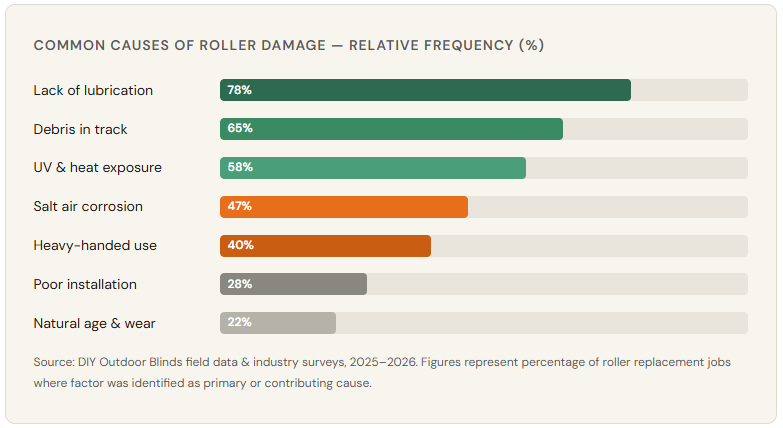
Understanding why rollers fail helps you prevent it from happening again after replacement. In Australia, a combination of environmental and lifestyle factors accelerate roller wear:
Environmental Factors
UV and heat: Australia’s intense summer sun degrades nylon roller housings and lubricants faster than in cooler climates. Doors on north-facing walls cop the most heat load.
Salt air corrosion: Coastal properties from Bondi to the Gold Coast deal with salt-laden air that accelerates rust on steel ball bearings and aluminium tracks alike. If you live within a couple of kilometres of the coast, expect to replace rollers more frequently — and choose stainless-steel or marine-grade hardware.
Dust and grit: In drier inland regions, fine dust and grit work their way into the track and act like sandpaper on roller surfaces. Regular track cleaning is essential.
Usage Factors
Heavy-handed sliding: Slamming or forcing a door that’s already stiff dramatically accelerates roller wear. If a door is hard to move, address the cause rather than powering through it.
Door weight: Heavier glass panels — common in modern double-glazed doors — place greater load on rollers. Using rollers rated below the door’s weight is a recipe for early failure.
Maintenance Factors
Neglected lubrication: The single biggest cause of premature roller wear. Rollers need periodic lubrication to reduce friction and prevent corrosion.
Dirty tracks: Debris accumulation in the bottom track forces rollers to work harder and can cause flat spots or cracking on wheel surfaces.
Benefits of Replacing Worn Out Rollers
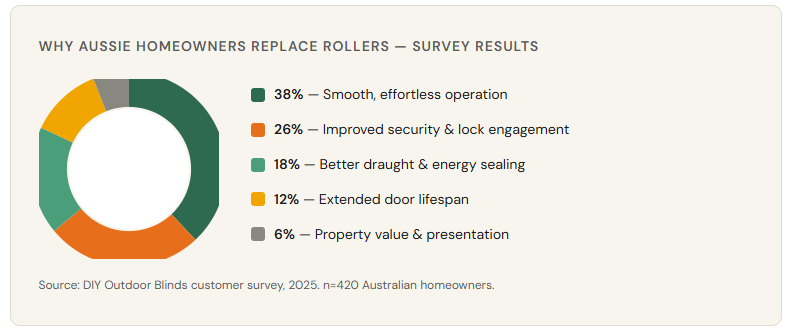
If you’ve been putting off the job, here’s a compelling reason to stop procrastinating. Replacing your worn sliding door hardware delivers benefits well beyond a smoother slide:
Smooth, Effortless Operation
The most immediate benefit: your door glides like new again. New rollers eliminate grinding, resistance, and wobble — making the door easier for everyone in the household to use, including kids and older family members.
Improved Home Security
A misaligned door doesn’t lock properly. When the door sits unevenly in the frame, the latch may not engage fully with the strike plate, leaving your home vulnerable. Fresh rollers restore correct alignment, ensuring your locks function as intended.
Better Energy Efficiency
Worn rollers allow the door to sit away from its seals, creating gaps that let in heat, cold air, insects, and noise. In Queensland summers or southern winters, that gap translates directly to higher air-conditioning and heating bills.
Extended Door Lifespan
Running a door on worn rollers doesn’t just wear out the rollers faster — it also damages the track, the door frame, and the glass panel itself. A timely roller replacement can save you from a far more expensive door replacement down the track.
Pairing great door hardware with high-quality outdoor shading is the ultimate way to protect your outdoor living area. Have a look at our Café Blinds and Ziptrak Blinds to create a fully comfortable, weather-protected entertaining space.
Maintenance Tips
Good maintenance is the cheapest roller replacement you’ll ever do — because it means you won’t need one nearly as often. Here’s how to keep your sliding door hardware in top nick:
Routine Cleaning
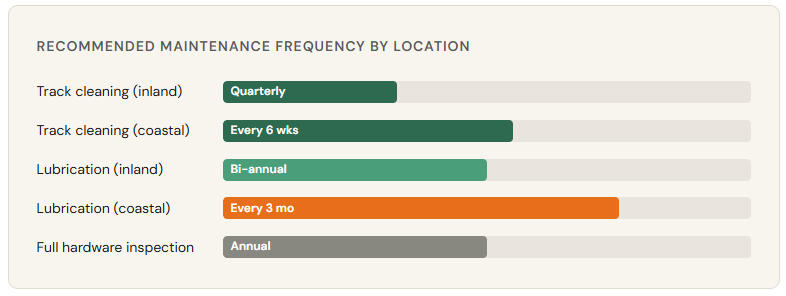
Clean the bottom track every one to three months using a stiff-bristled brush (an old toothbrush works brilliantly) to dislodge dirt, dust, hair, and debris. Follow up with a vacuum and a damp cloth. In dusty inland areas or near the coast, increase the frequency.
Lubrication
This is the single most impactful maintenance task. Apply a silicone-based lubricant (not WD-40 — see FAQ below) to the track and roller wheels every six to twelve months. Silicone sprays won’t attract dust and grit the way petroleum-based lubricants do, and they won’t degrade rubber seals.
Roller Adjustment
Most sliding door rollers have an adjustment screw accessible through a small hole in the door’s bottom rail. Turning it clockwise raises the door, anti-clockwise lowers it. Keeping the door properly levelled distributes weight evenly across both rollers, reducing premature wear on one side.
Track Inspection
Check the track for dents, bends, and corrosion annually. A damaged track will wear out new rollers quickly. Minor dents can be tapped back into shape with a rubber mallet and a block of timber; significant damage means track replacement.
Seal and Weatherstrip Check
Inspect the door seals and weatherstripping for cracks or compression loss. Failing seals accelerate roller wear by allowing moisture and grit inside the track.
Keeping your outdoor living area well protected is the best way to reduce the load on your door hardware. Our Zipscreen Outdoor Blinds shield your doors and windows from wind-driven debris, reducing maintenance frequency significantly.
When Professional Help Is Required
While most roller replacements are well within the scope of a motivated DIYer, there are situations where calling in a professional is the smarter — and safer — choice.
Signs You Should Call a Specialist
Damaged or bent track — Track replacement requires precise fitting and sometimes frame adjustment that goes beyond basic DIY.
Cracked or stressed glass — A professional glazier should assess and remove any damaged glass panel before roller work begins.
Very heavy or oversized panels — Commercial-grade, double-glazed, or large-format panels may weigh 80–200kg and require two-person lift equipment to safely remove.
Frame misalignment — If the door frame itself has shifted due to subsidence or structural movement, a tradesperson or builder needs to assess before any hardware replacement.
Unfamiliar or discontinued door models — Sourcing correct rollers for older or imported doors can be tricky; a specialist can identify and source the right parts.
Rental or strata properties — Always check your lease or strata by-laws before making modifications. Some buildings require approved trades for any door hardware work.
For guidance on the best outdoor blind and roller shutter solutions that complement your door setup, our team at DIY Outdoor Blinds is happy to help. We also offer advice on how to protect your door hardware from the elements with the right outdoor screening solutions.
Sliding Door Roller Replacement Costs in Australia (2026)
Budgeting for a roller replacement? Here’s a realistic guide to what you can expect to pay across Australia in 2026:
| Approach | Parts Cost (AUD) | Labour Cost (AUD) | Total Estimate (AUD) |
|---|---|---|---|
| DIY — standard residential door | $25 – $80 | — | $25 – $80 |
| DIY — heavy or double-glazed door | $60 – $150 | — | $60 – $150 |
| Professional — standard door | $30 – $90 | $120 – $200 | $150 – $290 |
| Professional — heavy/commercial door | $80 – $200 | $180 – $320 | $260 – $520 |
| Track replacement (if required) | $40 – $120 | $150 – $300 | $190 – $420 |
Prices are indicative estimates for Australian metropolitan areas as of 2026. Regional and remote areas may attract higher call-out fees. Always obtain multiple quotes.
Frequently Asked Questions
Here are the questions we hear most often from Australian homeowners tackling sliding door roller issues.
Conclusion
Sliding door rollers might be small, but they carry a big responsibility — literally and figuratively. Keeping them in good condition is one of the most straightforward and cost-effective maintenance jobs a homeowner can undertake, and the payoff is enormous: smooth operation, better security, improved energy efficiency, and a longer-lasting door.
The key takeaways from this guide:
- Watch for early warning signs: grinding, stiffness, wobbling, or a door that sits unevenly in its frame.
- The Aussie climate — UV, salt air, heat — is hard on sliding door hardware. Regular maintenance is essential.
- Use silicone lubricant — not WD-40 — and clean tracks regularly to extend roller life.
- Most homeowners can replace rollers themselves as a DIY job — but know when to call a professional.
- Replace all rollers at the same time, not just the one that’s visibly failed.
At DIY Outdoor Blinds, we’re passionate about helping Australians get the most out of their indoor-outdoor living spaces. The right outdoor blinds and shading solutions work hand in hand with a well-maintained sliding door — protecting your track from debris, shading your glass from UV degradation, and making your outdoor area a genuinely year-round haven.